

Your handy guide to Arbat, Moscow's MAIN pedestrian street (PHOTOS)

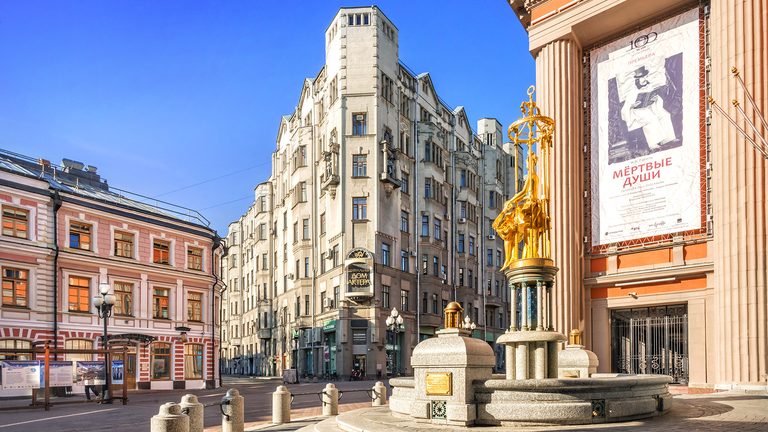
The most famous street in Moscow offers a huge selection of restaurants and bars, along with an extensive cultural program.
You can walk the entire street at a leisurely pace in just 20 minutes – it's only 1.2 kilometers (0.75 mi.) long. But, know this, in the area of Arbat and its famous side streets, you can wander for an entire day: there's an incredible concentration of iconic places, luxurious buildings and mansions from different eras.
The street became pedestrian-only relatively recently – in 1986. Before that, trams ran along it. And, even earlier, before the parallel and much wider New Arbat Street was built, this was part of the "government" route that Joseph Stalin would take to the Kremlin.
Various historical figures, including Alexander Pushkin, Marina Tsvetaeva, Alexander Scriabin, Feodor Chaliapin and many others, once lived in one of the many historic 19th-century mansions along the street at different times.
Here are the Arbat landmarks we recommend you don't miss:
The ‘Khudozhestvenny’ movie theater
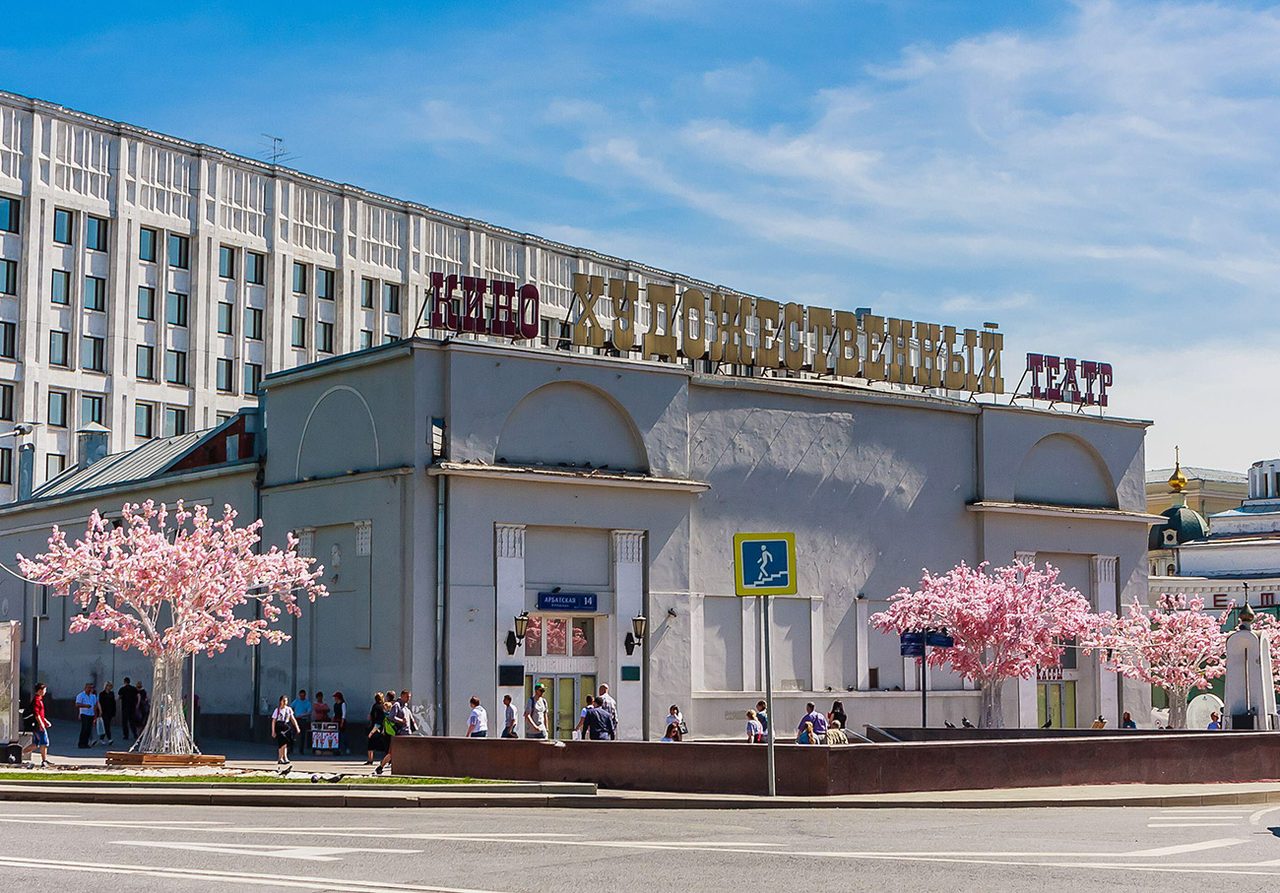
Technically, it's not on the street itself, but on Arbat Square. This is the first building you see when you exit the ‘Arbatskaya’ (Dark blue and light blue) subway station. Moscow's oldest cinema opened in 1909 and, today, it still retains its Art Nouveau aesthetics and shows films in their original languages.
Vakhtangov Theater
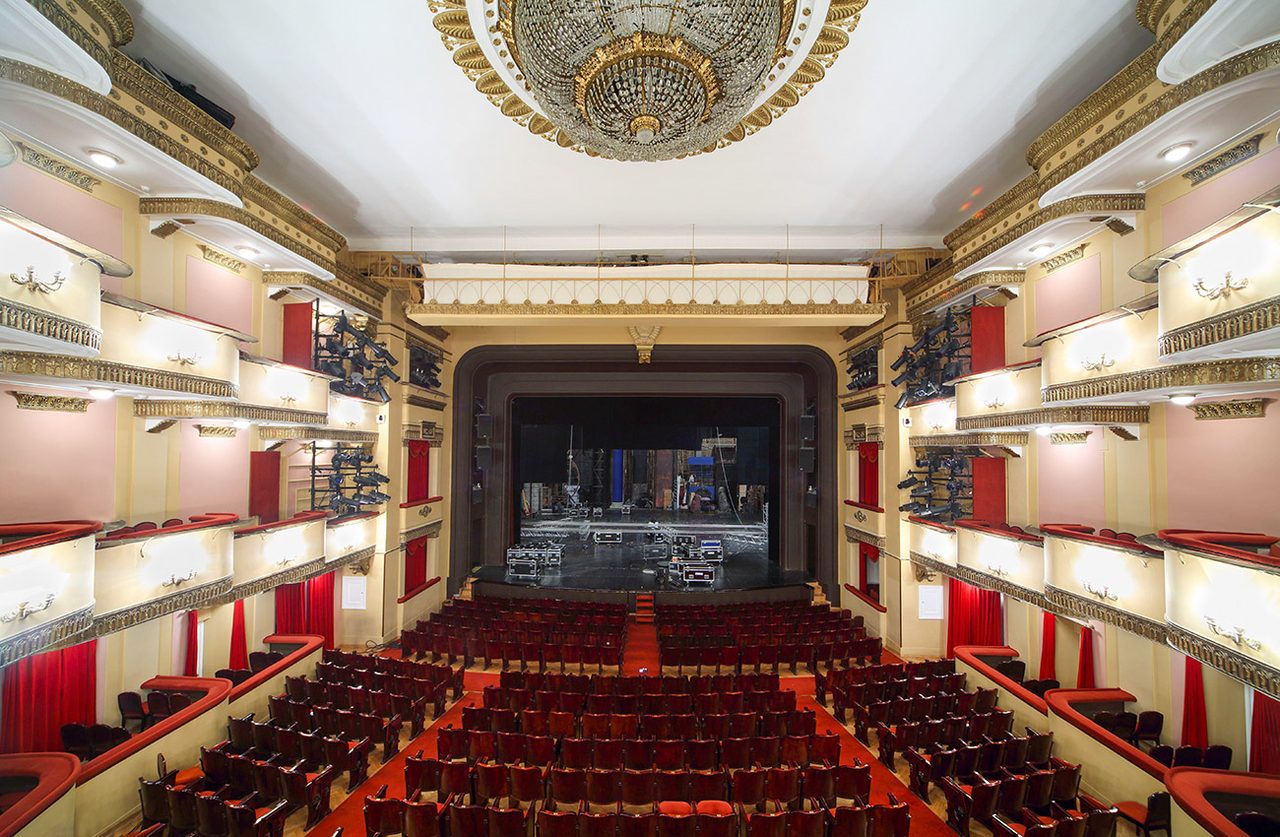
In 1921, a student drama studio under director Yevgeny Vakhtangov staged its first performance in this building on Arbat. Today, this theatre with a century-long history is considered one of Russia's premier theaters.
Tsoi wall
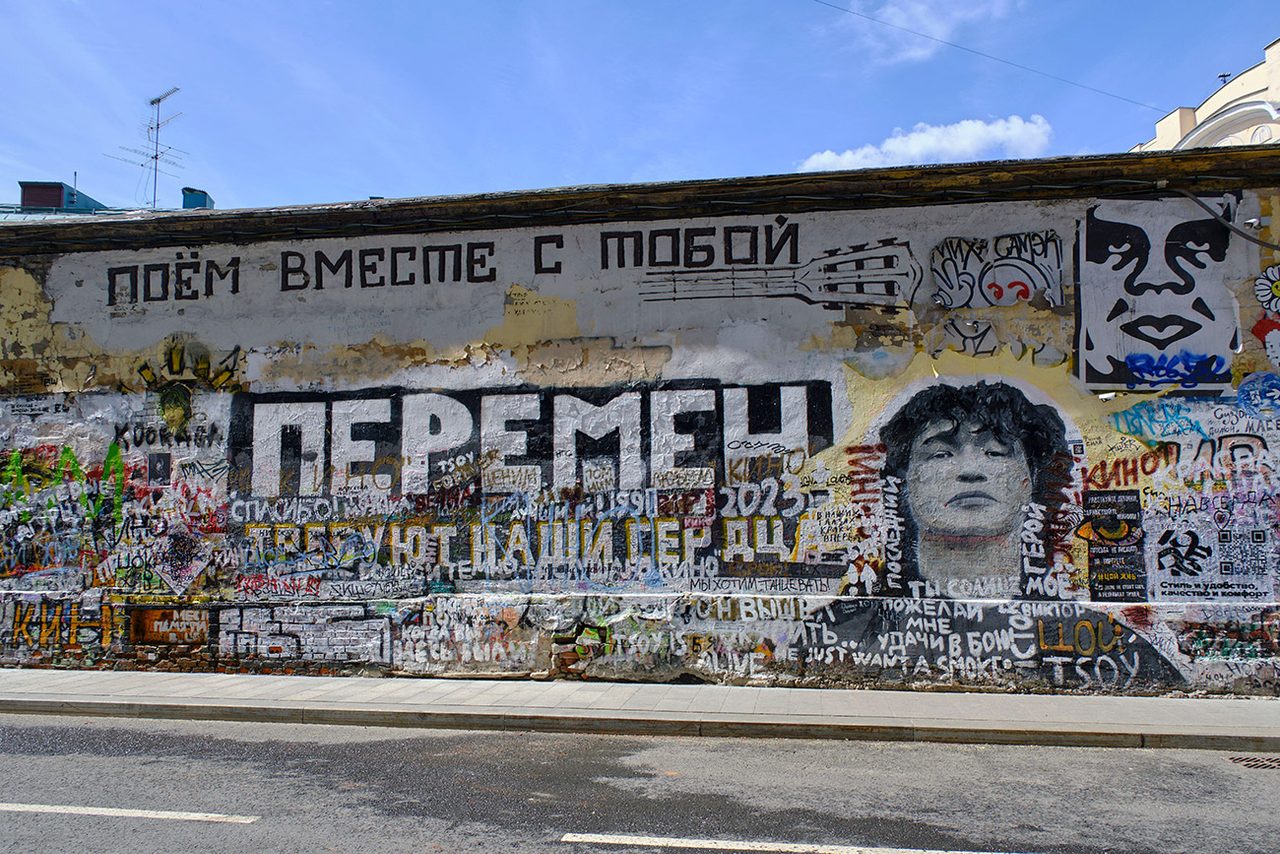
Arbat is synonymous with contrasts. Along it, 19th-century tenement houses coexist with Constructivist architecture and a classical drama theater, for example, sits alongside rock music. The ‘Tsoi Wall’ is an impromptu pilgrimage site for fans of the legendary band ‘Kino’ and its leader Viktor Tsoi, covered in graffiti and lyrics from the musicians' iconic songs.
The House with Knights
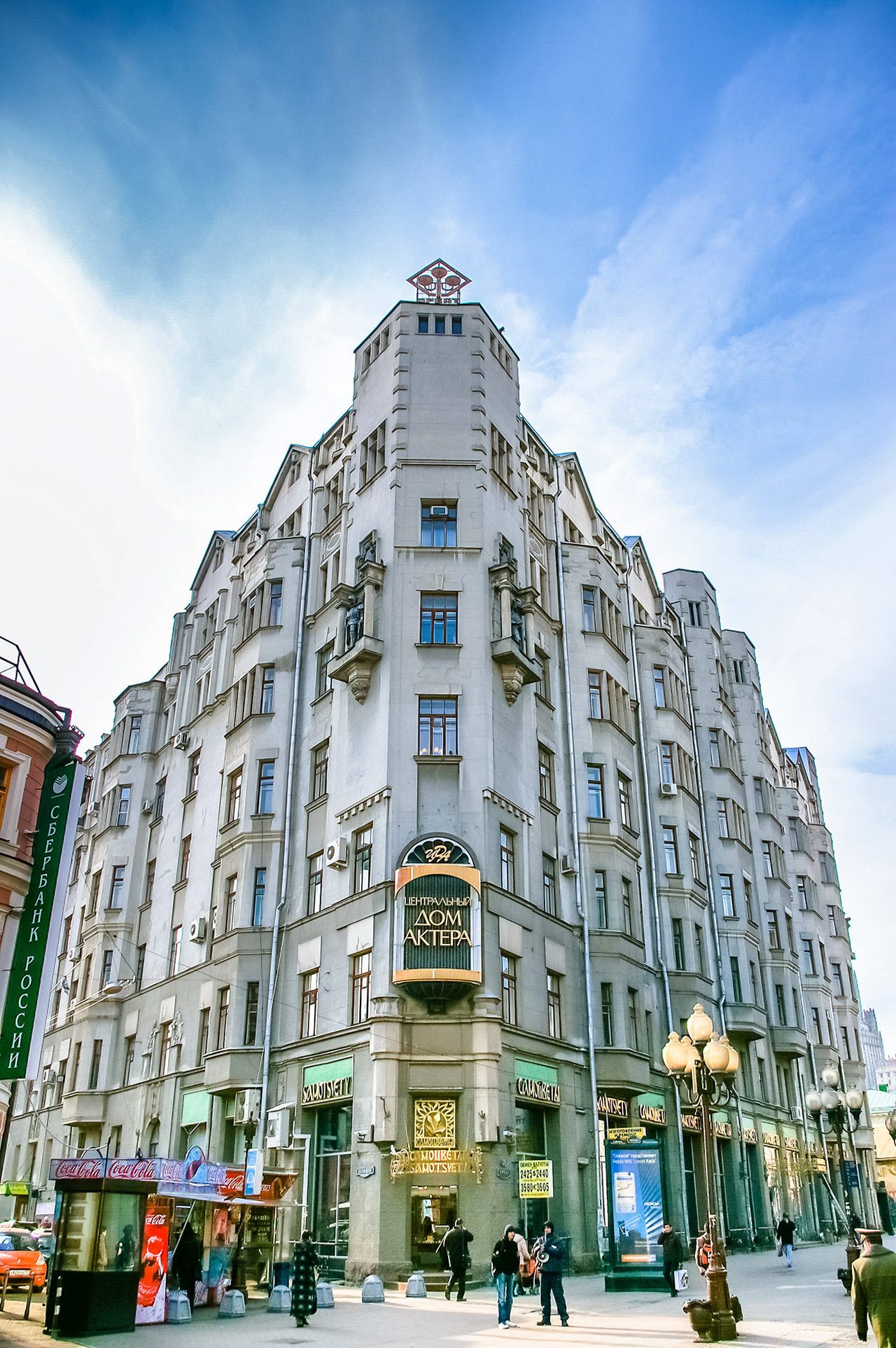
This is the popular name for the tenement house of merchant Filatov, built in 1913 in the Neo-Gothic style. True to the genre, this pseudo-medieval building is “guarded” by two stone knight sculptures, a signature touch by the architect.
Melnikov House
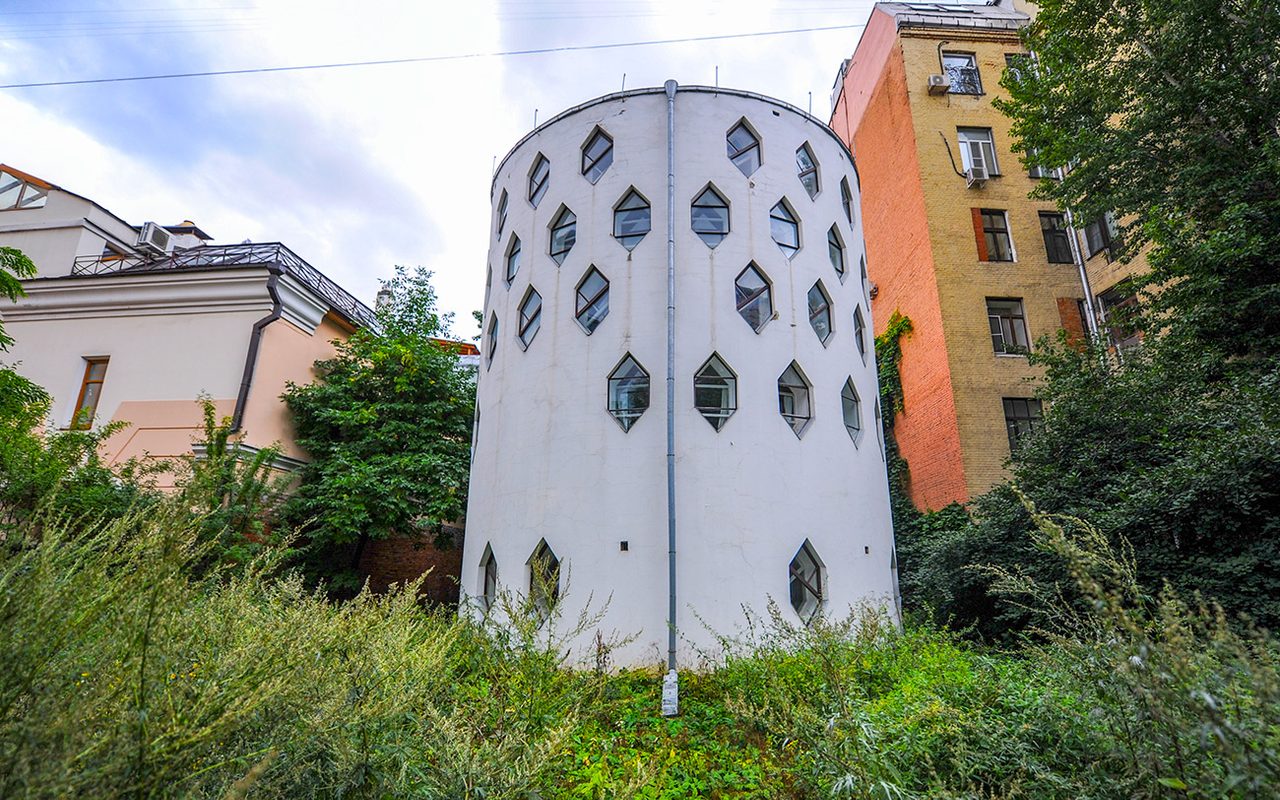
In Krivoarbatsky Lane, a true masterpiece of architectural avant-garde hides away. The unusual cylindrical building was designed for himself in the 1920s by famous Constructivist architect Konstantin Melnikov. Across three floors are the owner's workshop, living room, bedroom, kitchen and dining room — today, all are part of a museum.
Monument to Bulat Okudzhava
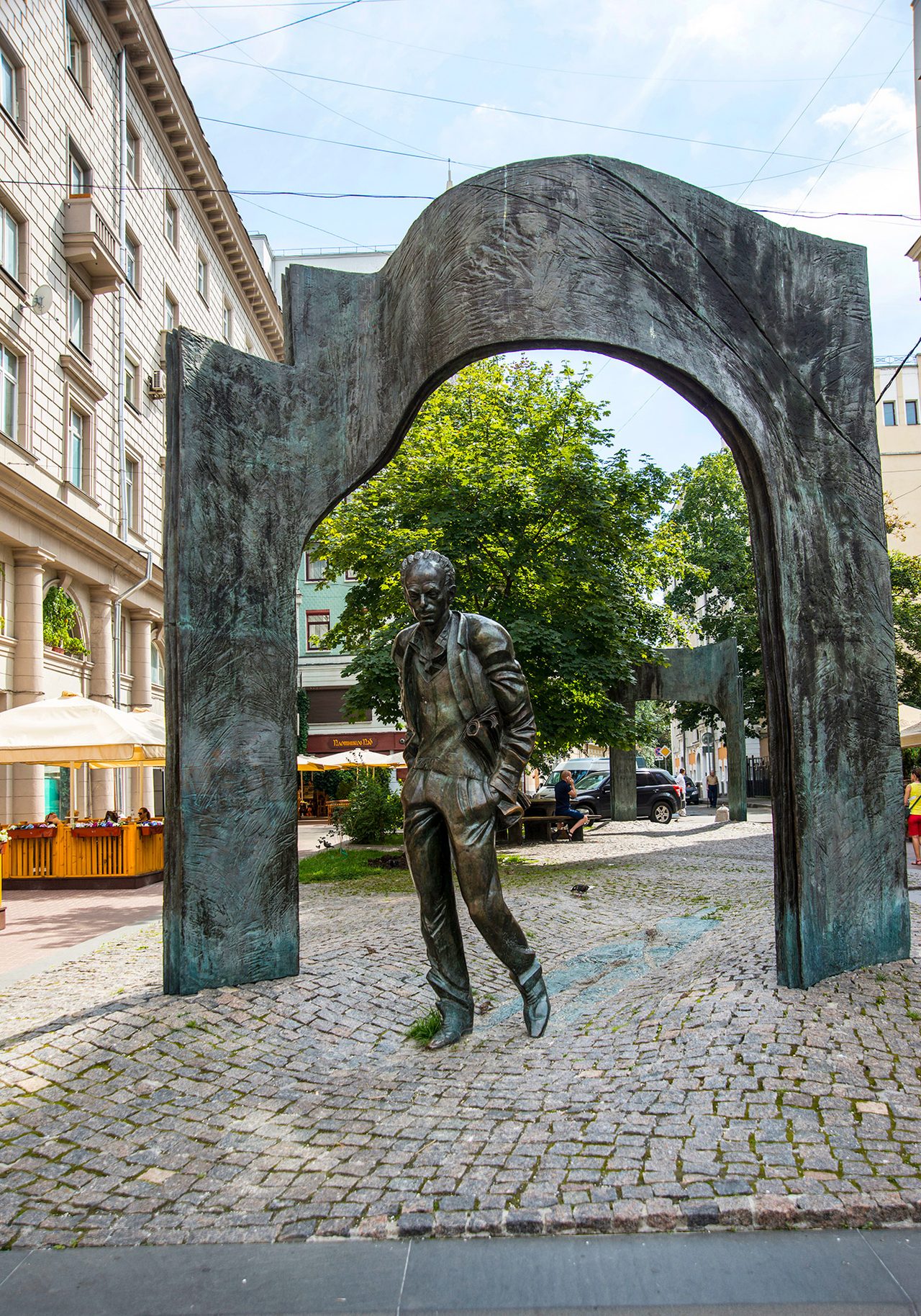
"Ah, Arbat, my Arbat, you are my fatherland" (“Ах, Арбат, мой Арбат, ты – мое отечество”) Soviet poet and bard Bulat Okudzhava used to sing. He spent his childhood in a communal apartment in one of Arbat's buildings. He sang of the quiet courtyards, cobblestones and unhurried life of these old Moscow places. In 2002, a monument by sculptor Georgy Frangulyan was erected near the house where the poet lived.
Church of the Transfiguration on the Sands
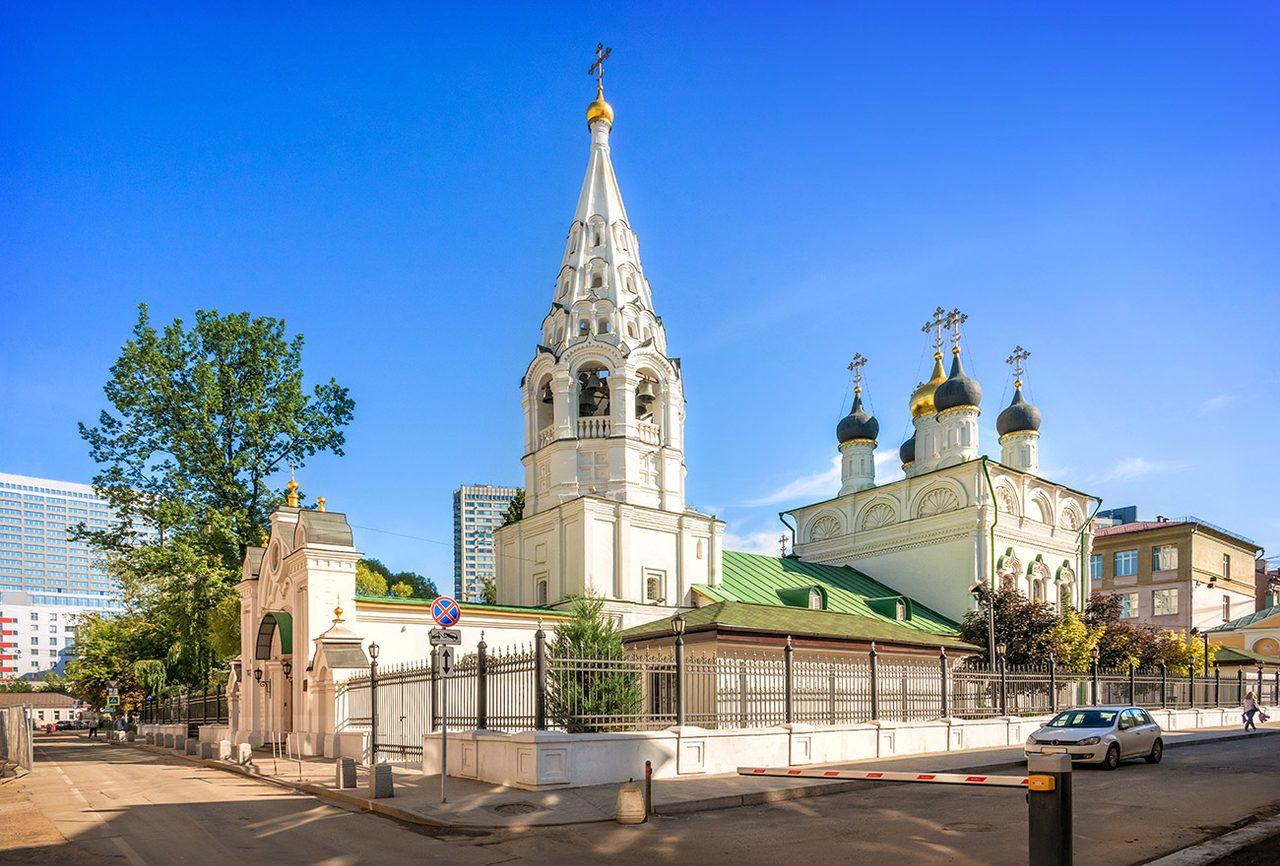
This is the church captured by classic artist Vasily Polenov in his famous painting ‘Moscow Courtyard’.
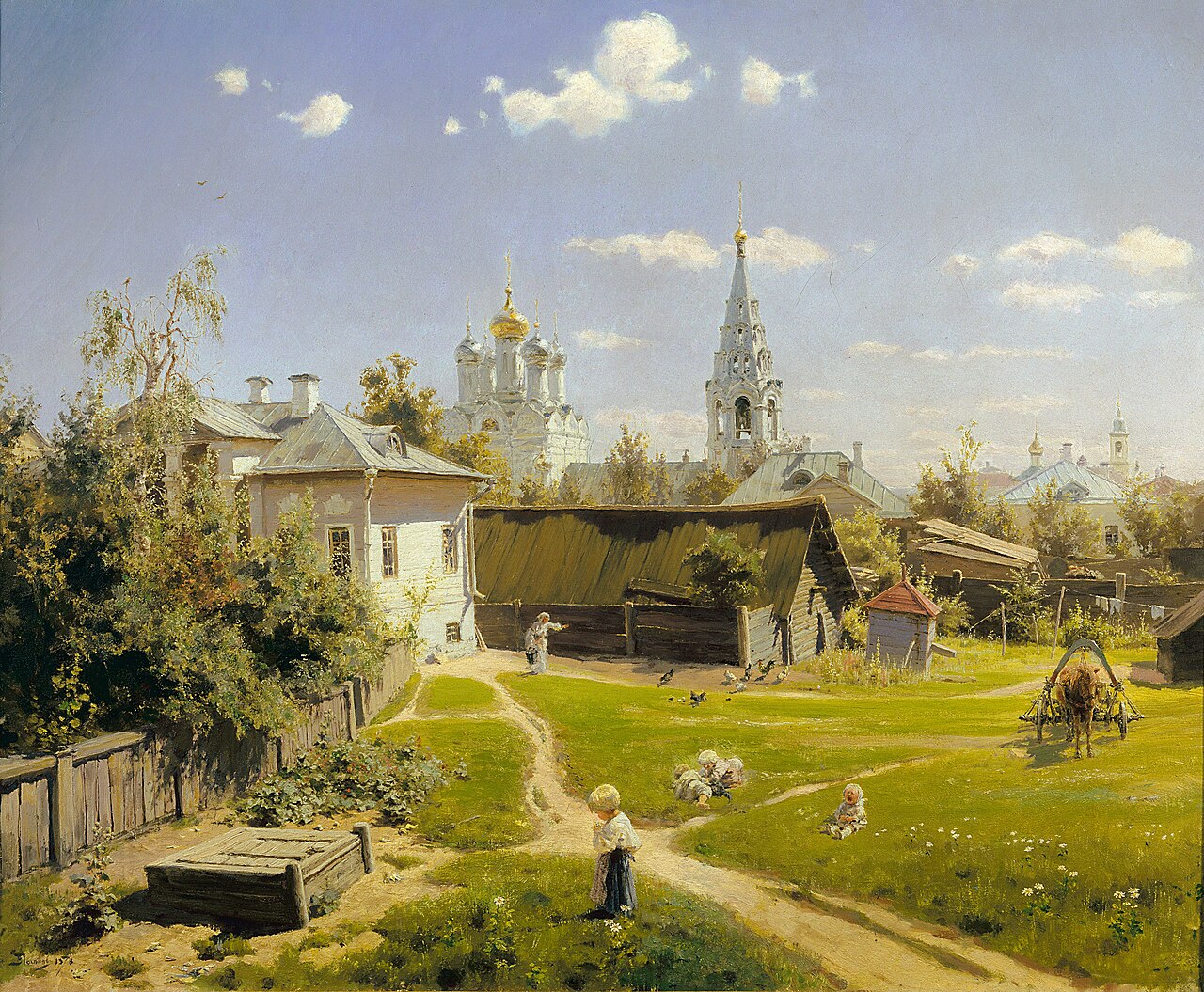 Vasily Polenov. Moscow Courtyard, 1878
The church was built in the early 18th century in the Moscow style, with abundant decoration, window architraves, kokoshniks and a tented bell tower.
Alexander Pushkin memorial apartment
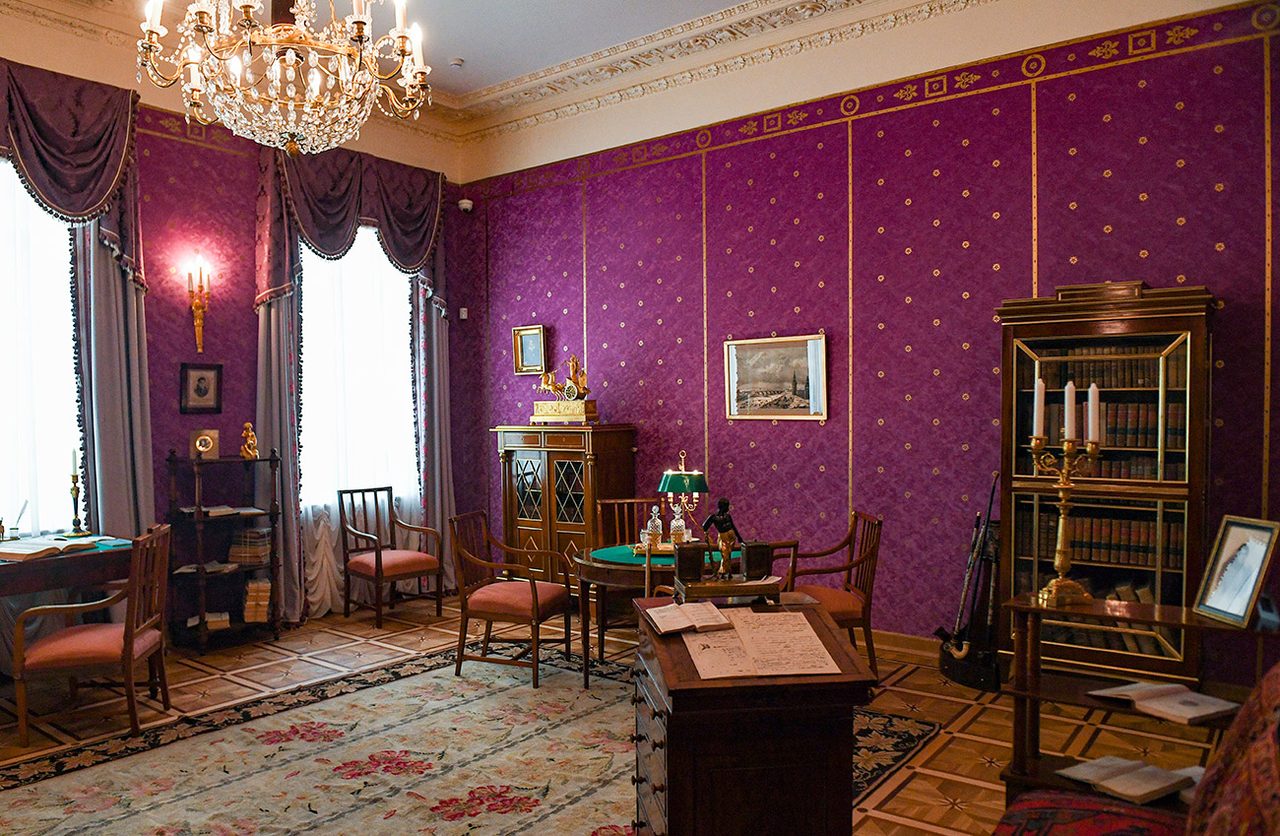
There are many places in Moscow connected with Pushkin. He lived on Arbat for only a short time, but it was into this house, now a museum, that he moved with his young wife Natalya Goncharova right after their wedding.
Ministry of Foreign Affairs
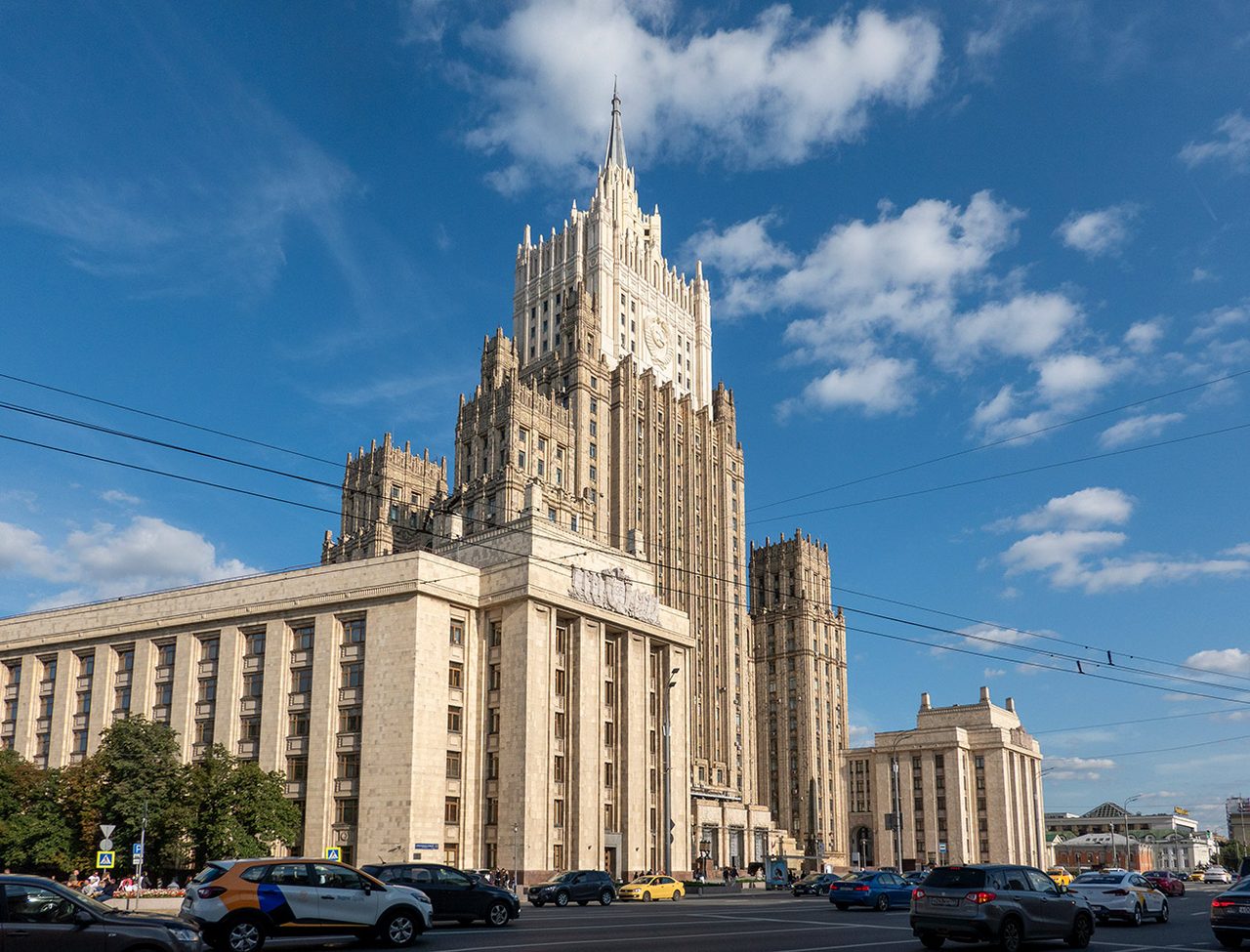
From the Sadovoye (Garden) Ring side, near ‘Smolenskaya’ metro station, Arbat is crowned by the majestic Stalin-era skyscraper. This is where the Russian Ministry of Foreign Affairs is located. You're unlikely to get inside, but you can fully appreciate the Soviet high-rise from the outside.