
10 works by avant-garde artist Mikhail Larionov that you should know
He pioneered his own style of non-objective painting and depicted the light emanating from objects.
1. ‘Acacias in Spring’, 1904
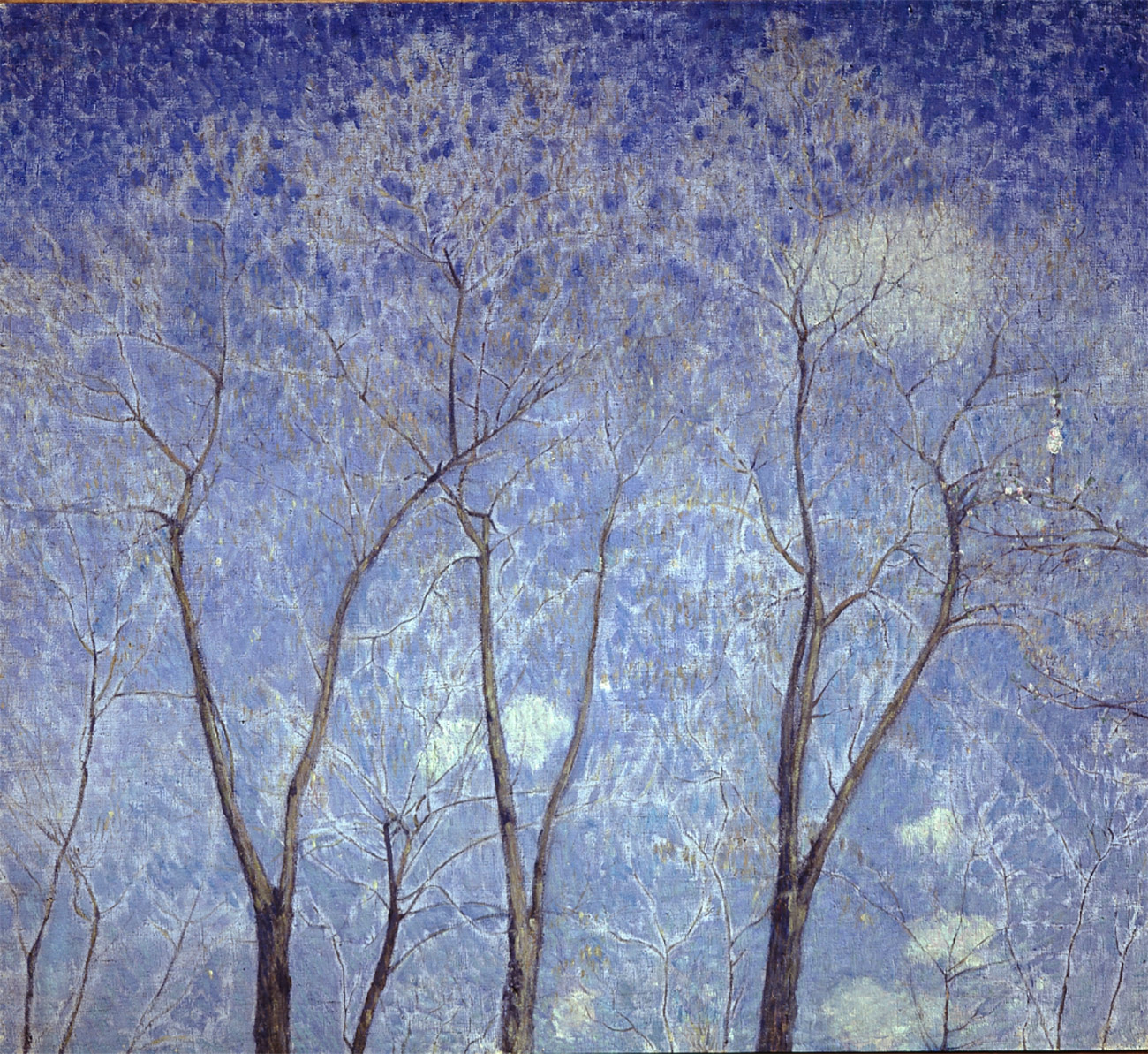
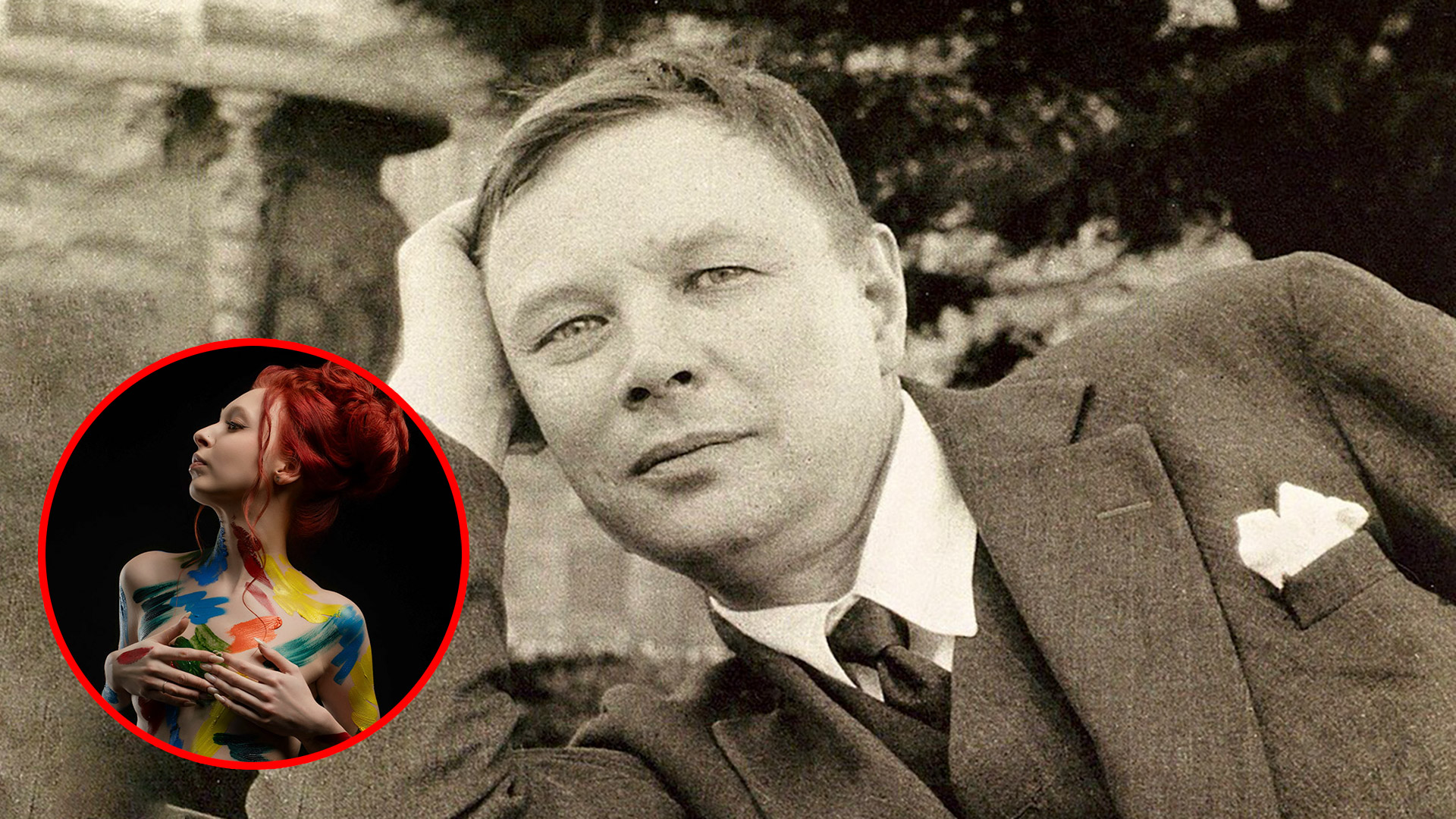
He treasured his memories of the city of his childhood – Tiraspol – and even got a tattoo on his left hand with the date of his birth – May 22, 1881. “I love returning to these moments that move me so deeply and always wish that my young life and these wonderful mornings would be repeated. I would like to hold onto them forever and remain living in them, only in them,” wrote Larionov.
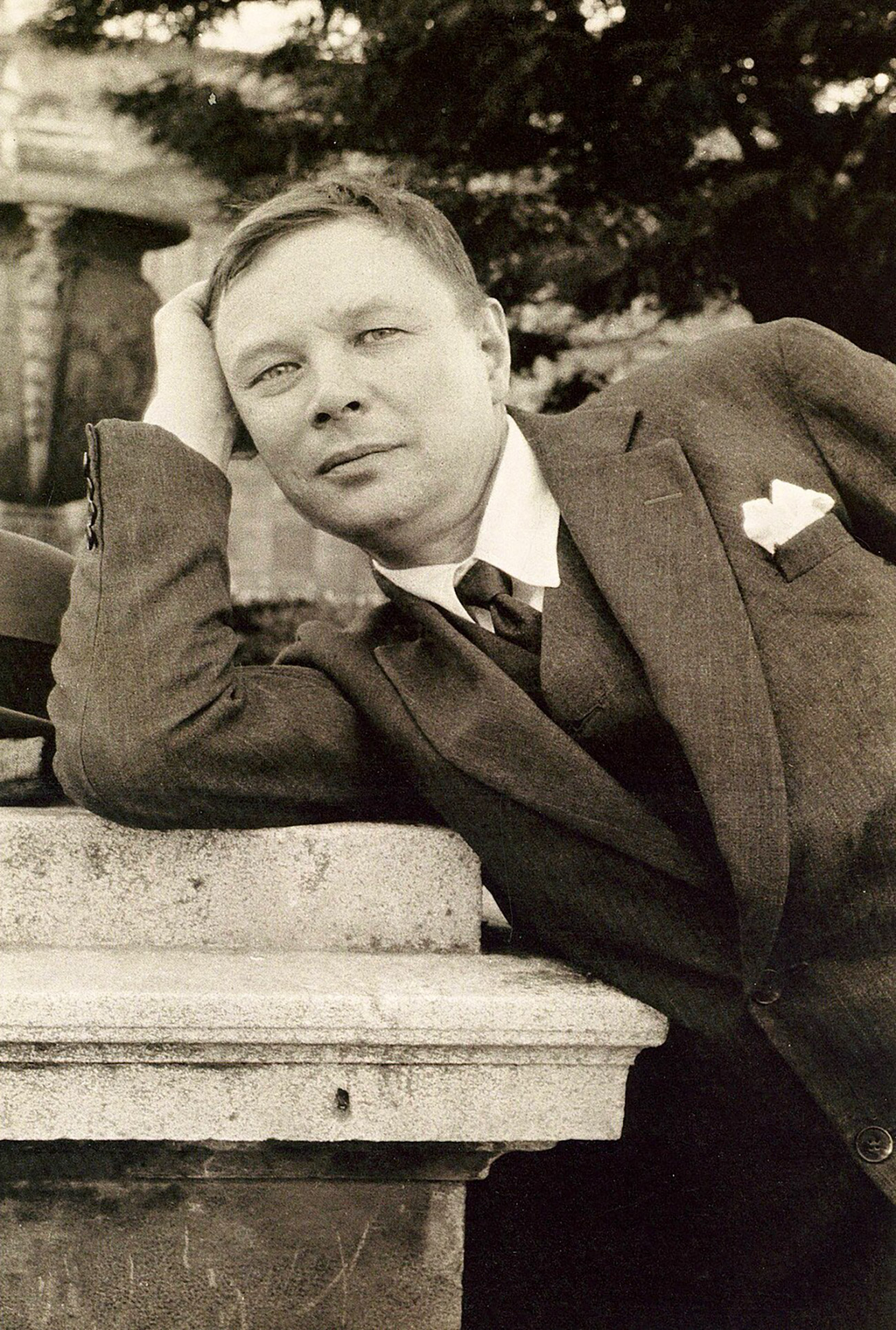
In 1898, he enrolled at the Moscow School of Painting, Sculpture and Architecture, where Valentin Serov, Konstantin Korovin and Isaac Levitan became his mentors, but he frequently traveled to his homeland. It was in Tiraspol that he created his most famous impressionist works, including the lyrical ‘Acacias in Spring’. This painting was purchased from the artist by renowned collector Nikolai Ryabushinsky. Larionov’s popularity began with the exhibitions organized by the ‘Golden Fleece’ magazine, which he published.
2. ‘Barber’, 1907
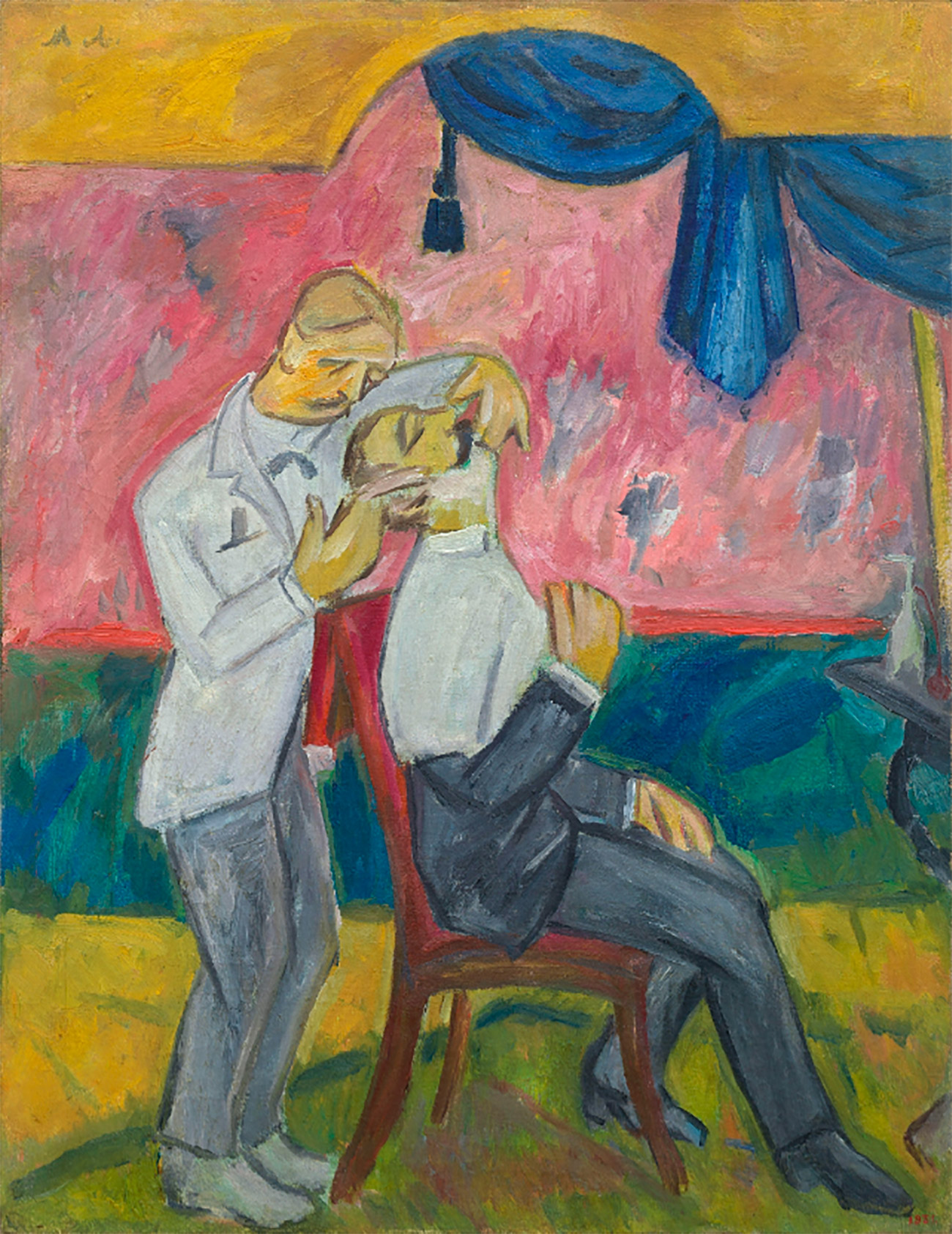
Larionov was one of the most talented students of his generation. He eagerly sought out new directions in art, rejecting any fixed forms and genres. One of the sources of inspiration was acquaintance with the works of French impressionists, including the collection of philanthropist Sergei Shchukin.
During this period, he painted a series of works titled ‘Barber’ in a neo-primitivist style: they clearly depict the signs of provincial stores and barbershops with their deliberately folk-art-style imagery. These paintings – featuring the obligatory velvet curtain and the simplified figures of the barber and his client – are almost grotesque. Critics lambasted them, but Larionov used everything around him for creative experiments.
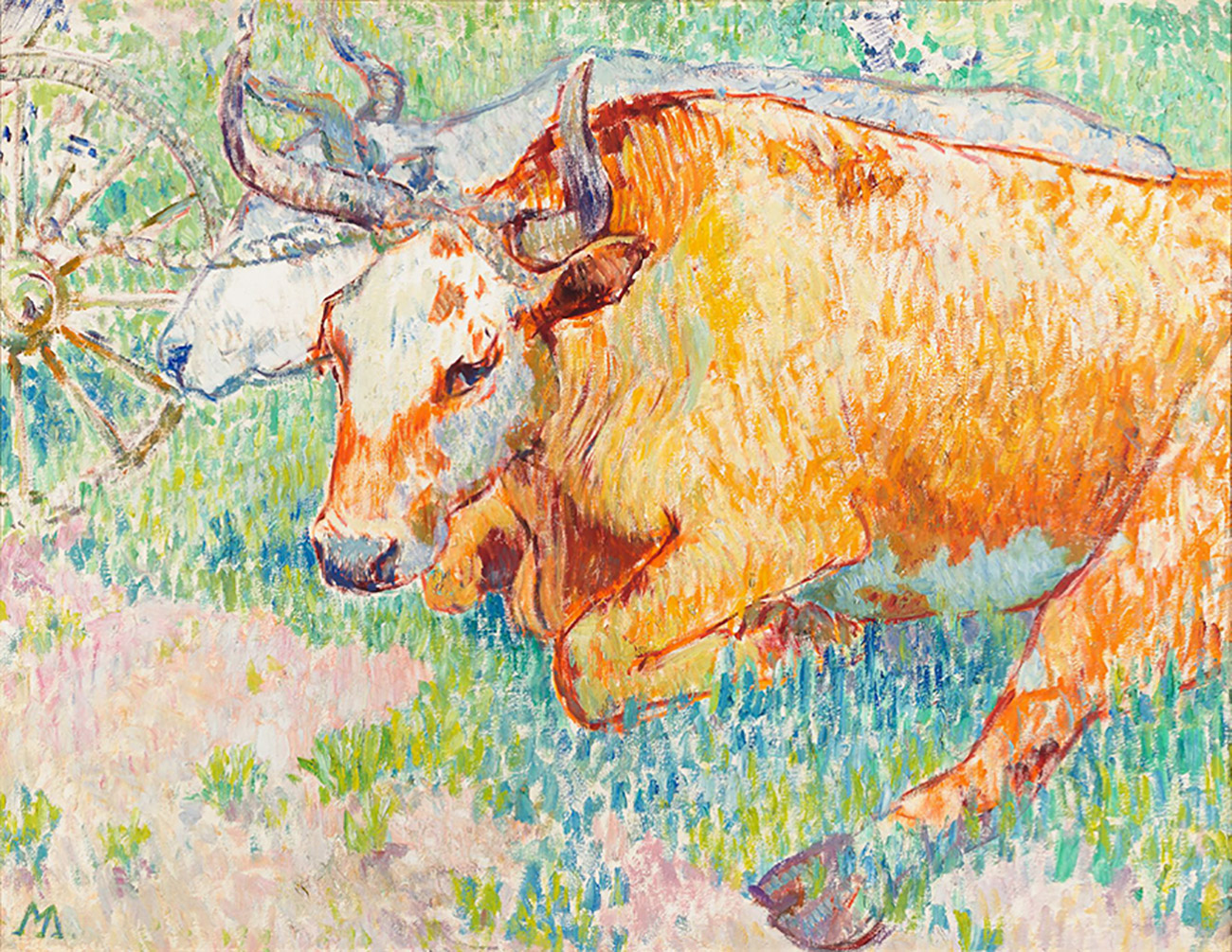
3. ‘Oxen resting’, 1908
Wherever Larionov goes, there’s a scandal. In 1902, he brought every piece of work he had to the school’s student exhibition. He hung them on the walls and doors and laid them out on the floor. The committee entered the hall, but after a while, they left in silence. The students watched in amazement as the room was sealed off so that no one else could enter. It turned out that some of Larionov’s works were considered pornographic and he was suspended from classes for six months.
In 1908, he went to sketch on an estate in the Kherson region. So, the farm’s inhabitants – ducks, geese, goats, oxen – became the new heroes in the paintings.
4. ‘The Resting Soldier’, 1911
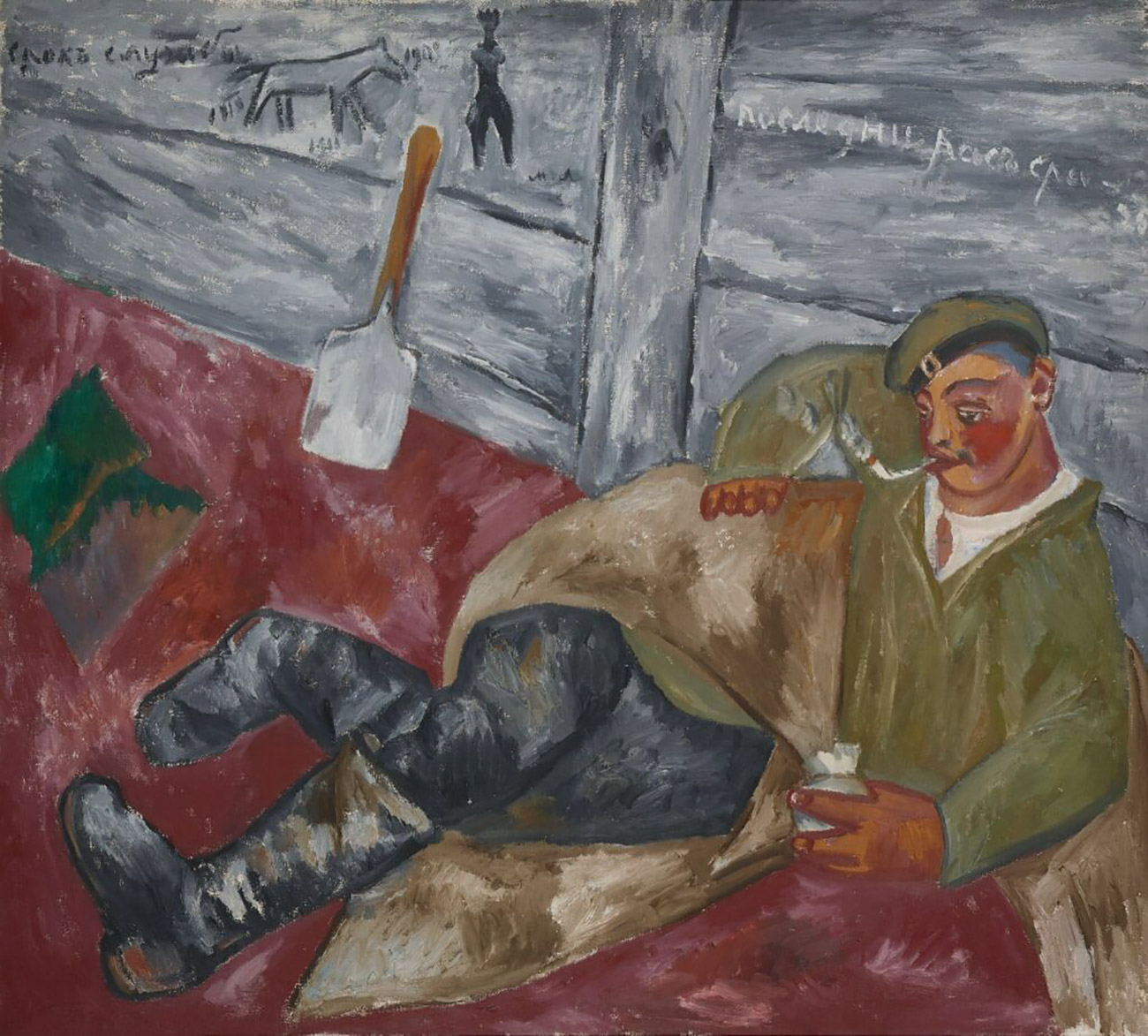
In 1910, Larionov co-organized the ‘Jack of Diamonds’ exhibitions, which included Aristarkh Lentulov, Ilya Mashkov, Pyotr Konchalovsky, Robert Falk and other experimental artists. He also came up with the title. But, very quickly, the paths of these like-minded people diverged: Larionov left the ‘Jacks’ with a scandal and created his own exhibition – ‘Donkey’s Tail’.
In 1911, the artist held an exhibition of his works, presenting over a hundred paintings. The critics were merciless, describing Larionov as an artist who showed great promise of descending into complete insanity. They also disliked the paintings depicting soldiers at rest, even though they were painted from life. In 1910–1912, Larionov underwent military training and depicted daily life in an army camp at the intersection of primitivism and Russian ‘lubok’.
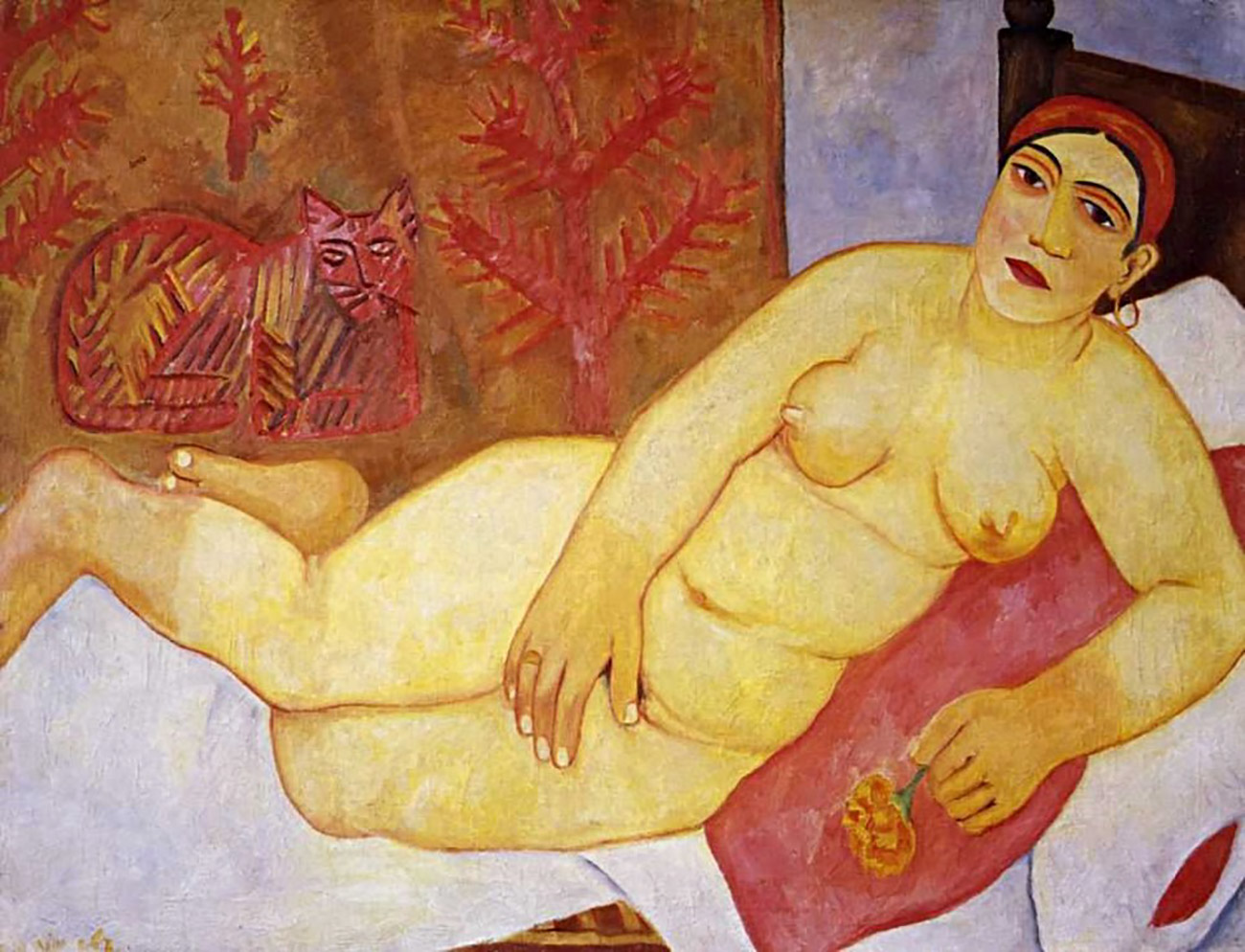
5. ‘The Katsapskaya Venus’, 1912
At school, Mikhail Larionov met artist Natalya Goncharova, who became his muse and like-minded person and, later, his wife.
A master of irony, he continued to experiment and, in 1912, began work on his ‘Venus’ series. One could discern the “predecessors” in these compositions: Édouard Manet’s ‘Olympia’ and Titian’s ‘Venus of Urbino’. Larionov’s ‘Venuses’ were not beauties; they did not inspire admiration. He painted ordinary women, housewives who ran their households with a firm hand – the “goddesses” of everyday life. The setting was fitting: a rug on the wall, a well-fed cat, a flower in her hand.
6. ‘Rooster. Radiant Study’, 1912
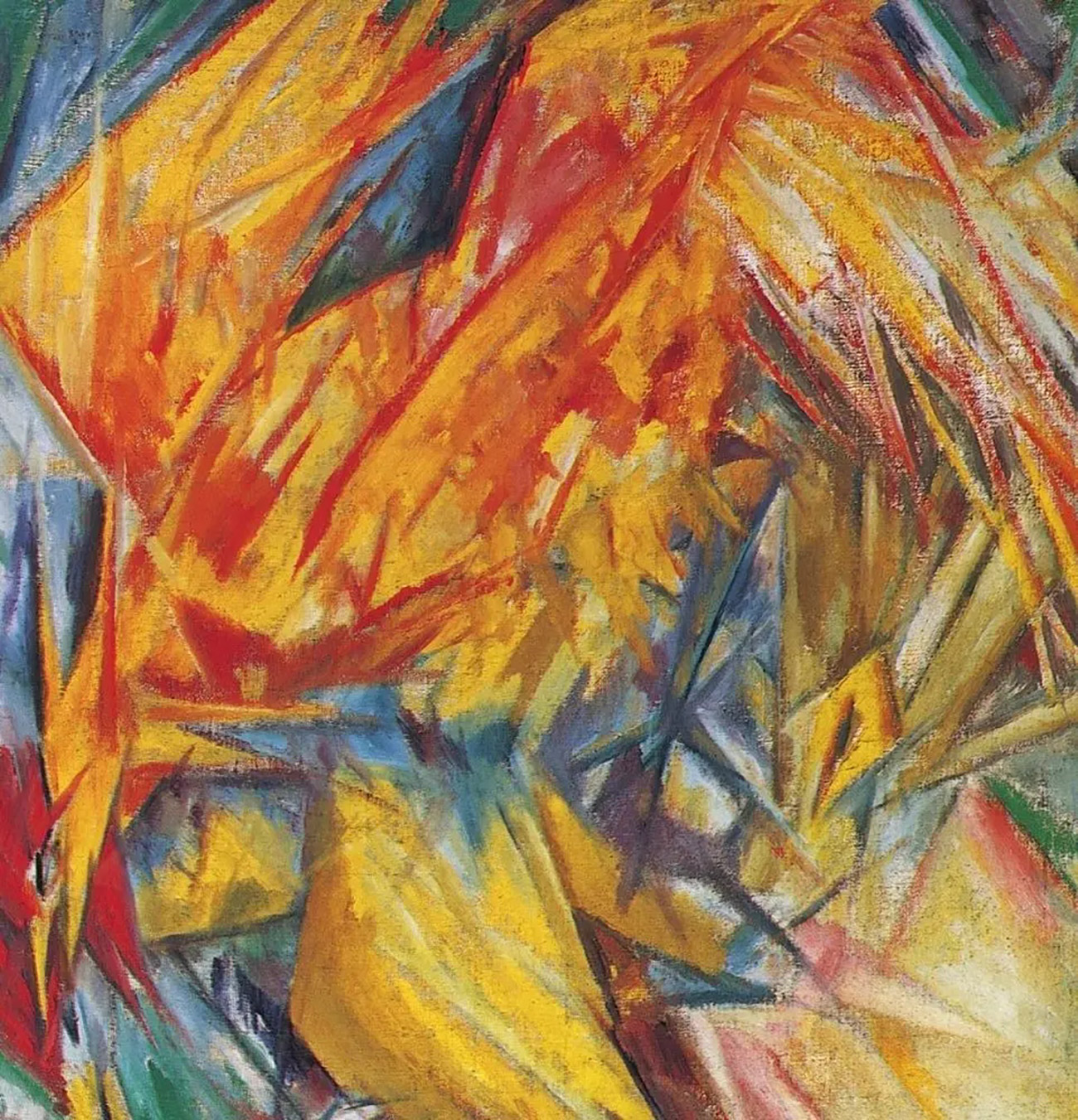
In the 1910s, the artist created his own genre of painting - Luchism. One of the starting points for its development was the work of William Turner. Larionov painted not objects, but light, the rays that are reflected from them, and believed that they erased “those boundaries that exist between the picture plane and nature.”
One of the first experiences of Rayonism was a painting of a rooster - the viewer sees the silhouette of a bird that strives to break out of the boundaries of the painting. Larionov presented it along with the manifesto “Radiants and Future Workers,” in which he described his concept, at the “Target” exhibition.
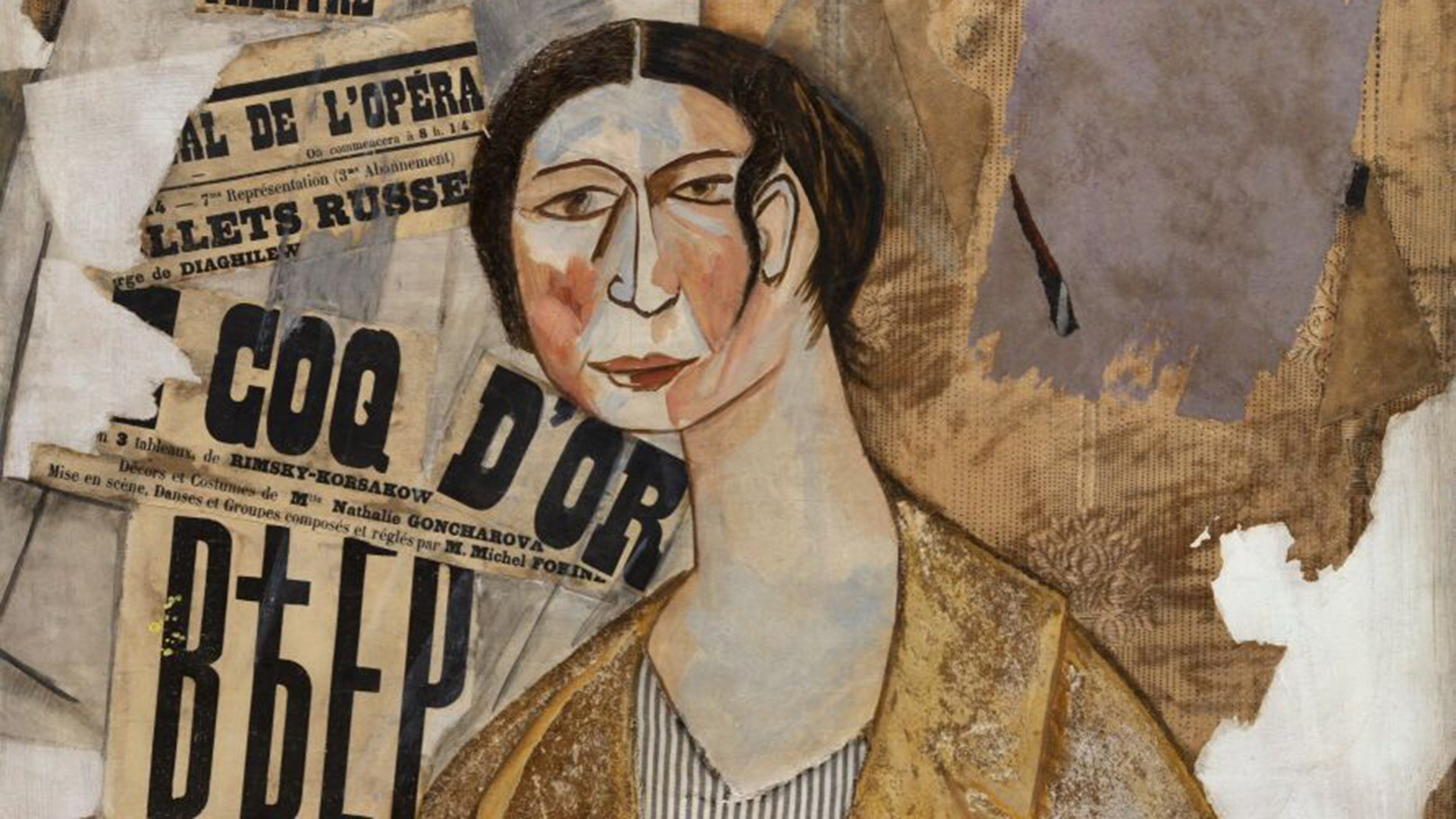
7. Portrait of Natalia Goncharova, 1915
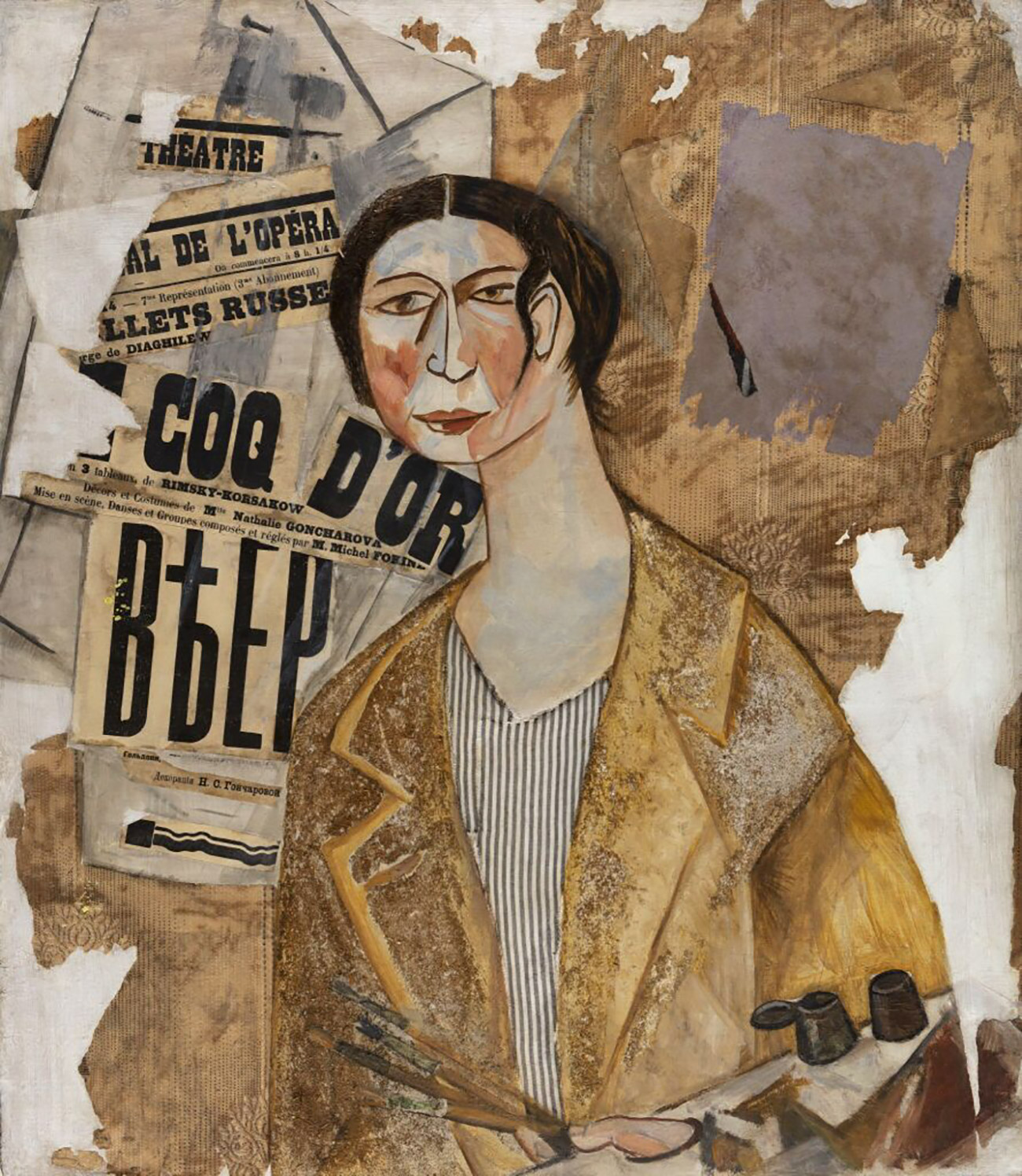
Larionov often painted his life partner, including her likeness in various works. For the background of his portrait of the artist, painted in 1915, Larionov chose a collage of posters for ‘The Golden Cockerel’ and ‘The Fan’ – Goncharova had designed the sets for this production at Alexander Tairov’s Chamber Theater in Moscow.
8. ‘The Forest’, 1916
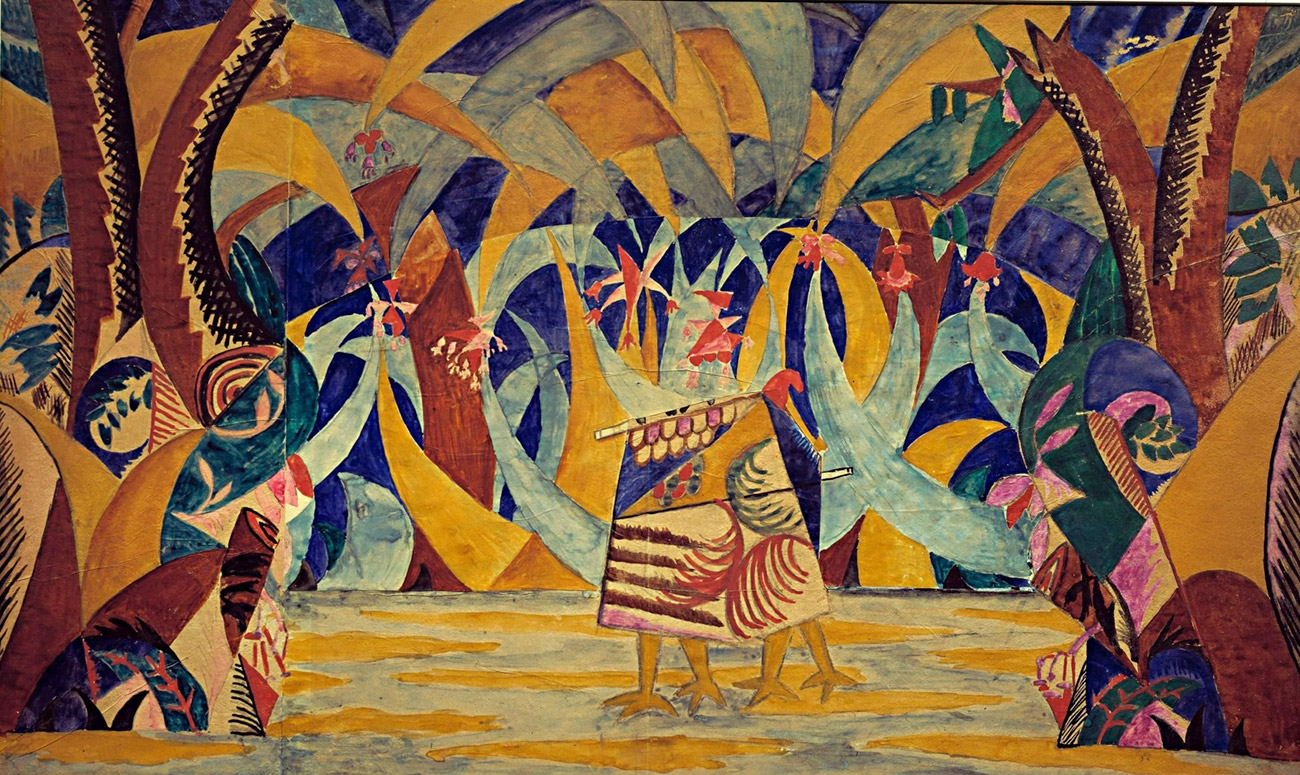
In 1914, famous impresario Sergei Diaghilev invited Larionov and Goncharova to work on a new ballet for his ‘Russian Seasons’, which were already making waves in Europe. They left in 1915, toured with the company for several years and, following the revolution in Russia, settled in Paris.
For ‘Russian Fairy Tales’, Larionov created moving sets: the backdrop depicting a forest was decorated with a multitude of flowers designed to sway in the gusts of wind. It gave the impression that everything on stage was in motion – the characters, Baba Yaga's hut and the forest.
Larionov designed the sets for six ballets of the ‘Russian Seasons’. But, the dancers complained: the costumes were heavy and their hats kept slipping over their eyes. But, the audience was delighted and Parisian fashionistas, imitating the dancers, began ordering tall hats.
9. ‘A Table Set by the Water’, 1930s
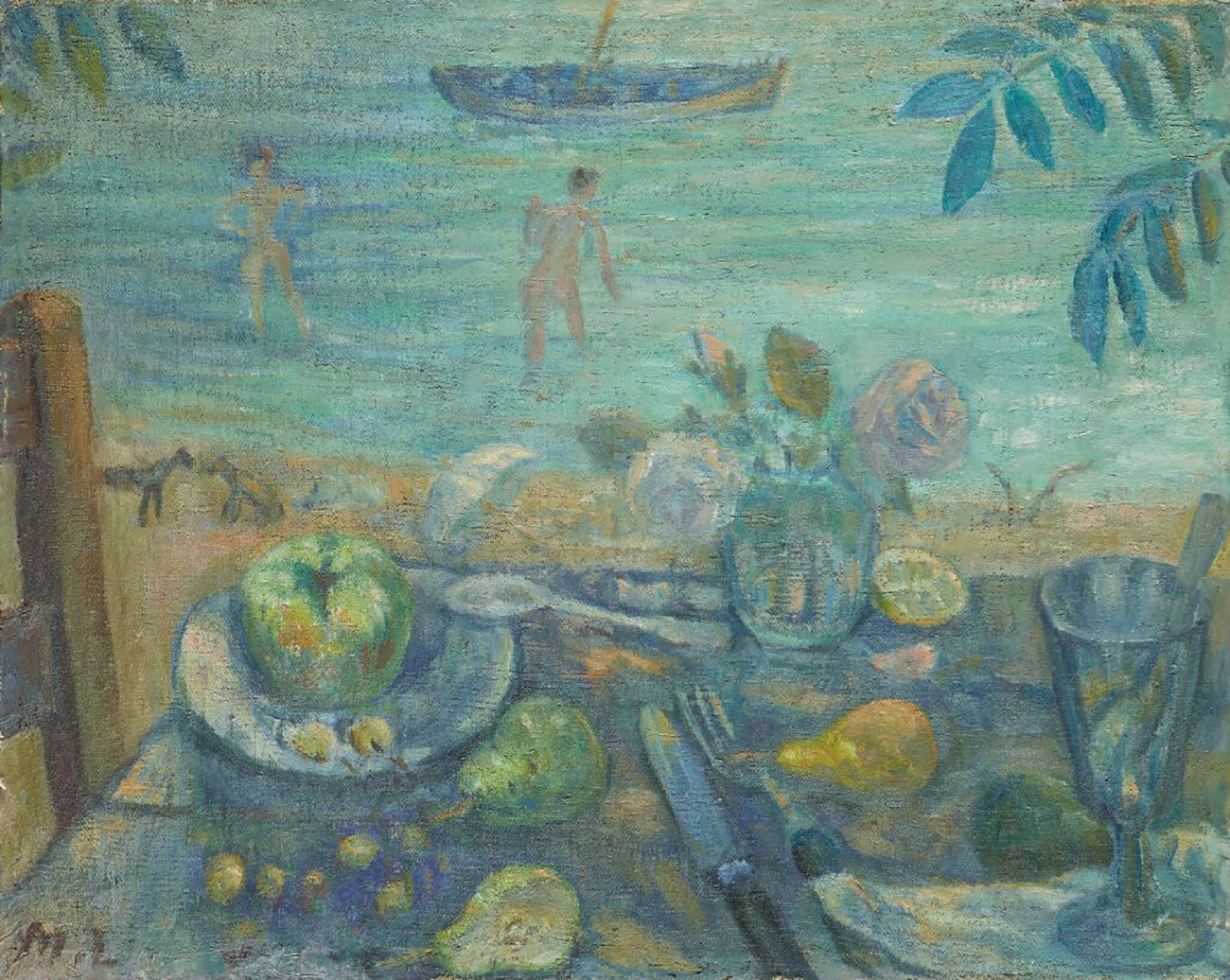
In Paris, the artist’s passion for experimentation began to wane. His style became more delicate, yet “echoes” of the past still occasionally surfaced in his new paintings. In the painting ‘Table Set by the Water’, Larionov depicted a nude man and woman standing in the water – as if in a nod to his earlier work ‘Bathing Soldiers’.
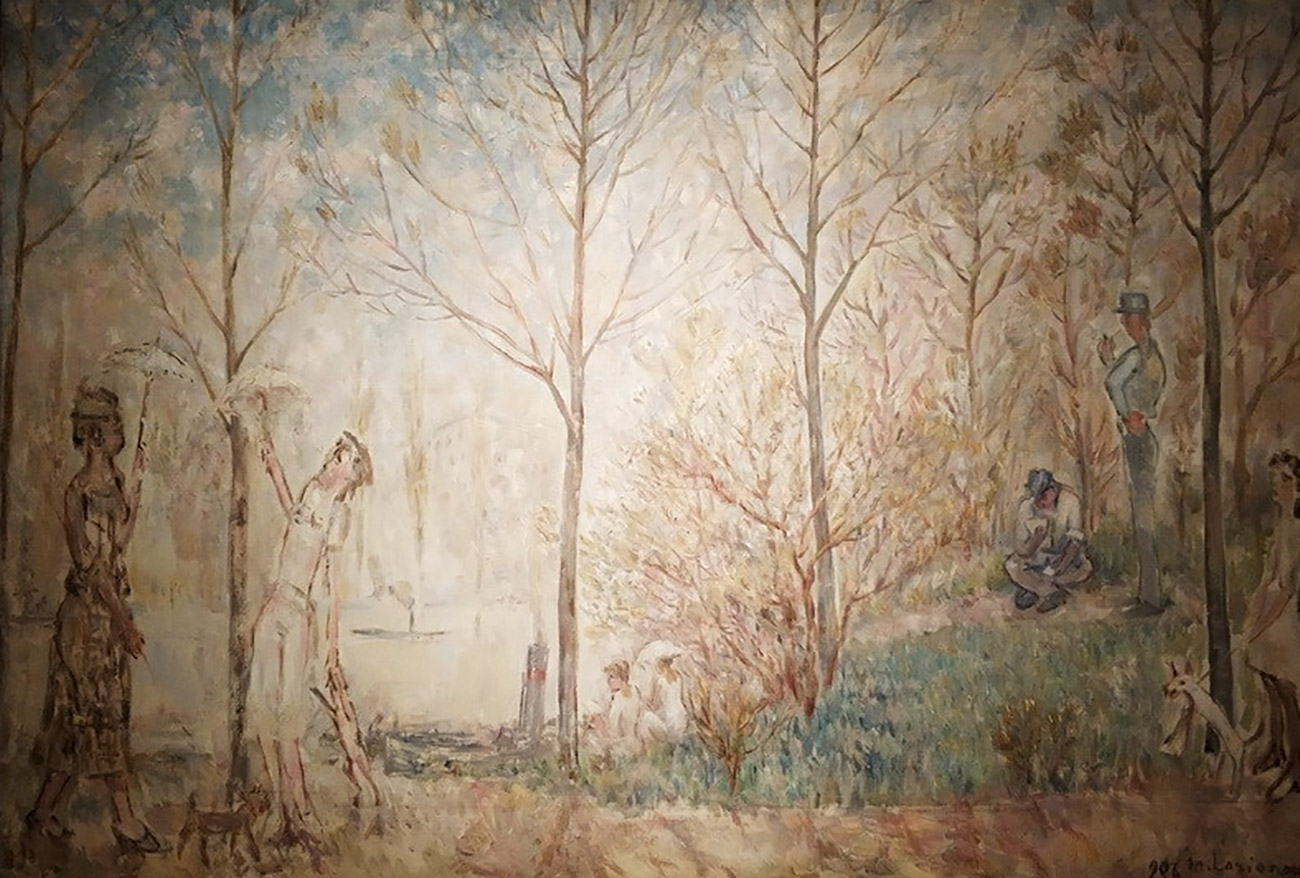
10. ‘On a Sunday Afternoon’, late 1920s-early 1930s
He and Goncharova didn’t marry until 1955, but the marriage lasted only seven years. The artist passed away in 1962 and Larionov died two years later. His second wife, the artist’s longtime muse Alexandra Tomilina, became the heir to both artists and bequeathed their collection to the Soviet Union.
The nostalgic painting ‘On a Sunday Afternoon’ is like a still from a forgotten movie. The landscape is veiled in a haze, as if it weren't ordinary fog, but the light reflected from memories.