

‘Worker and Kolkhoz Woman’: 5 facts about the legendary monument

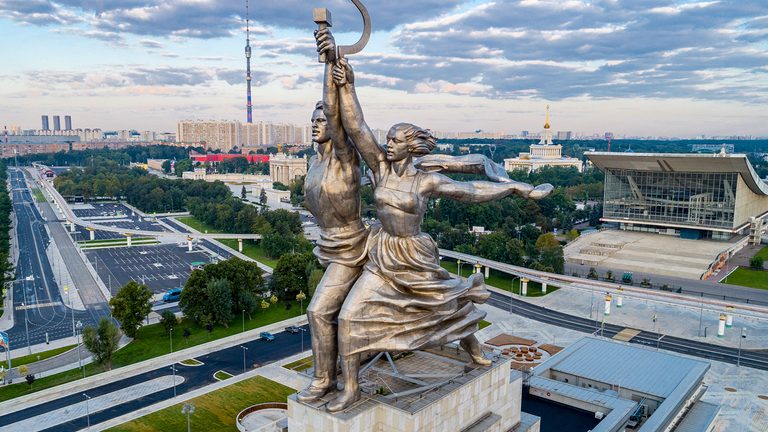
This is not just a statue, it’s one of the main symbols of Moscow.
1. The monument was created by a female sculptor
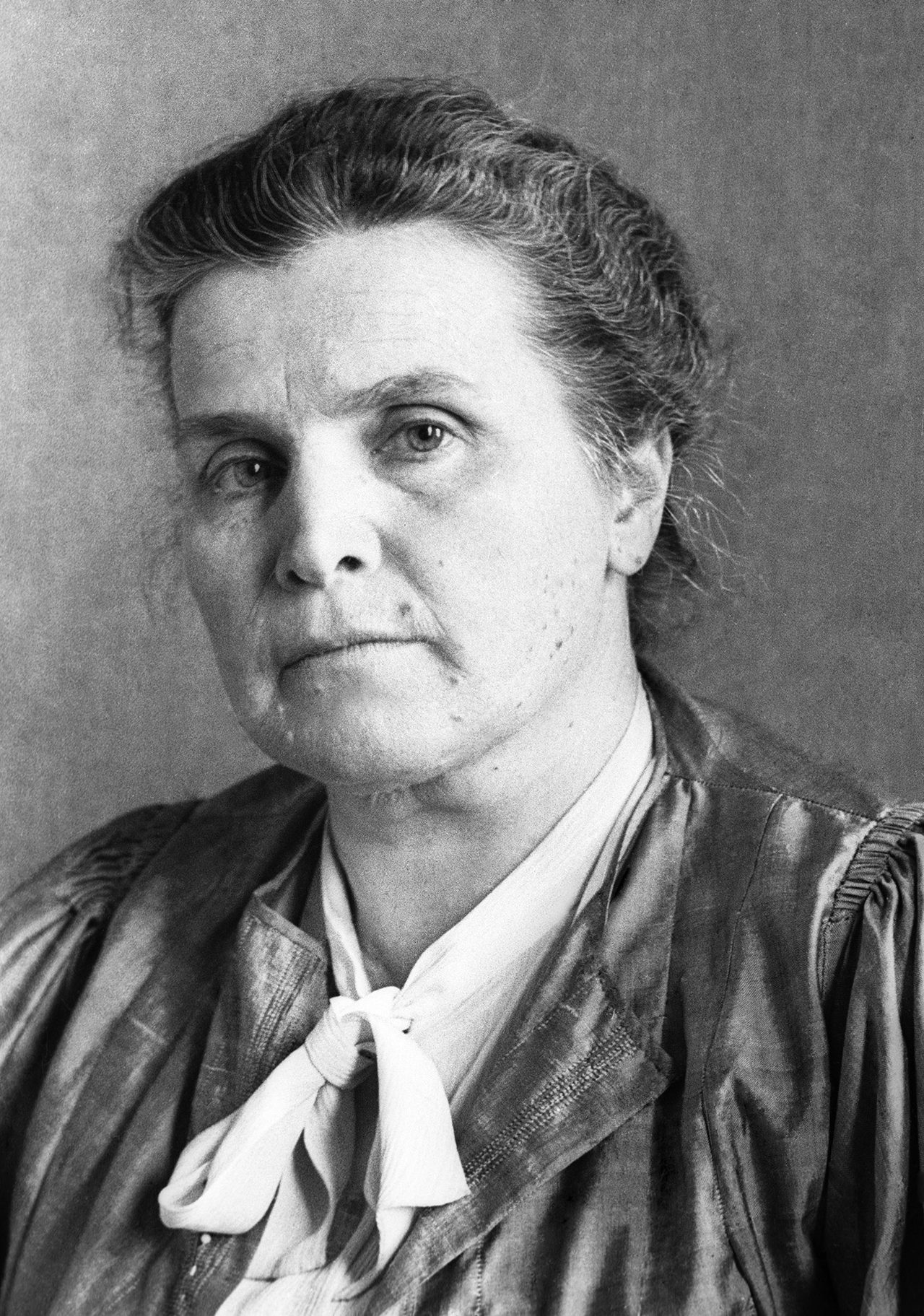 Vera Mukhina
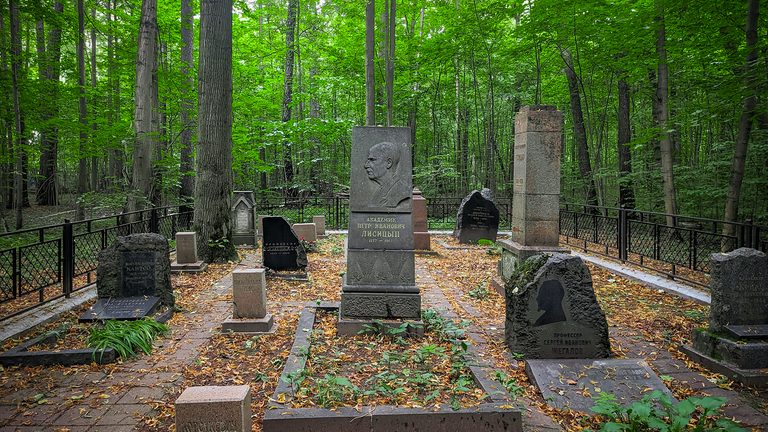
The main monument of the Soviet 1930s was created by a woman who herself had no connection to the proletariat. Vera Mukhina was born in Riga into a merchant family in 1889. In her youth, she was fascinated by Impressionism and the avant-garde and even studied sculpture in Paris, including under Émile-Antoine Bourdelle.
After the 1917 Bolshevik Revolution, Mukhina zealously began working for the Soviet government. She made sketches of workwear for women and created monuments to prominent revolutionaries and cultural figures. Mukhina would become one of the ideologues of socialist realism in sculpture. And who better to entrust with creating the symbol of the might of the Soviet state?
2. It first appeared at the World's Fair in Paris in 1937
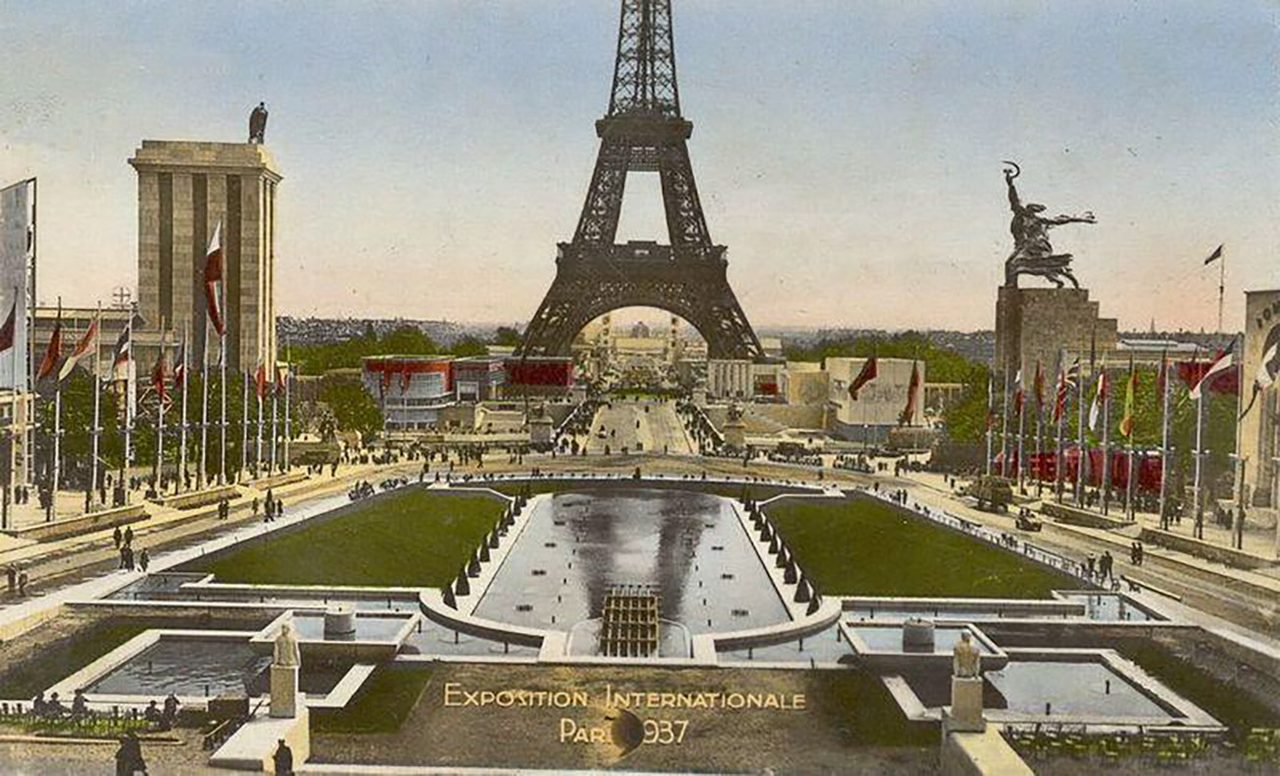 Panorama of the 1937 International Exhibition in Paris, on the right side is the USSR pavilion with the "Worker and Collective Farmer", opposite is the German pavilion with an eagle on the roof, in the center is the Eiffel Tower
In Paris, the 24-meter ‘Worker and Kolkhoz Woman’ crowned the Soviet pavilion.Boris Iofan, chief architect of the pavilion and the author of the concept, explained it this as follows: “A young man and a girl, personifying the owners of the Soviet land, the working class and the collective farm peasantry. They raise the emblem of the Land of Soviets, the hammer and sickle.”
On a sunny day, the entire composition shone so that the figures appeared to be flying. The feeling of flight and dynamism was enhanced by a flowing long scarf. The sculpture was also a politically calculated move, as its power and size were meant to overshadow the eagle on the pavilion of the Third Reich, which stood directly opposite.
The French press dubbed the monument the greatest sculpture of the 20th century and even Picasso himself admired the “Soviet giants”.
3. A unique alloy was used
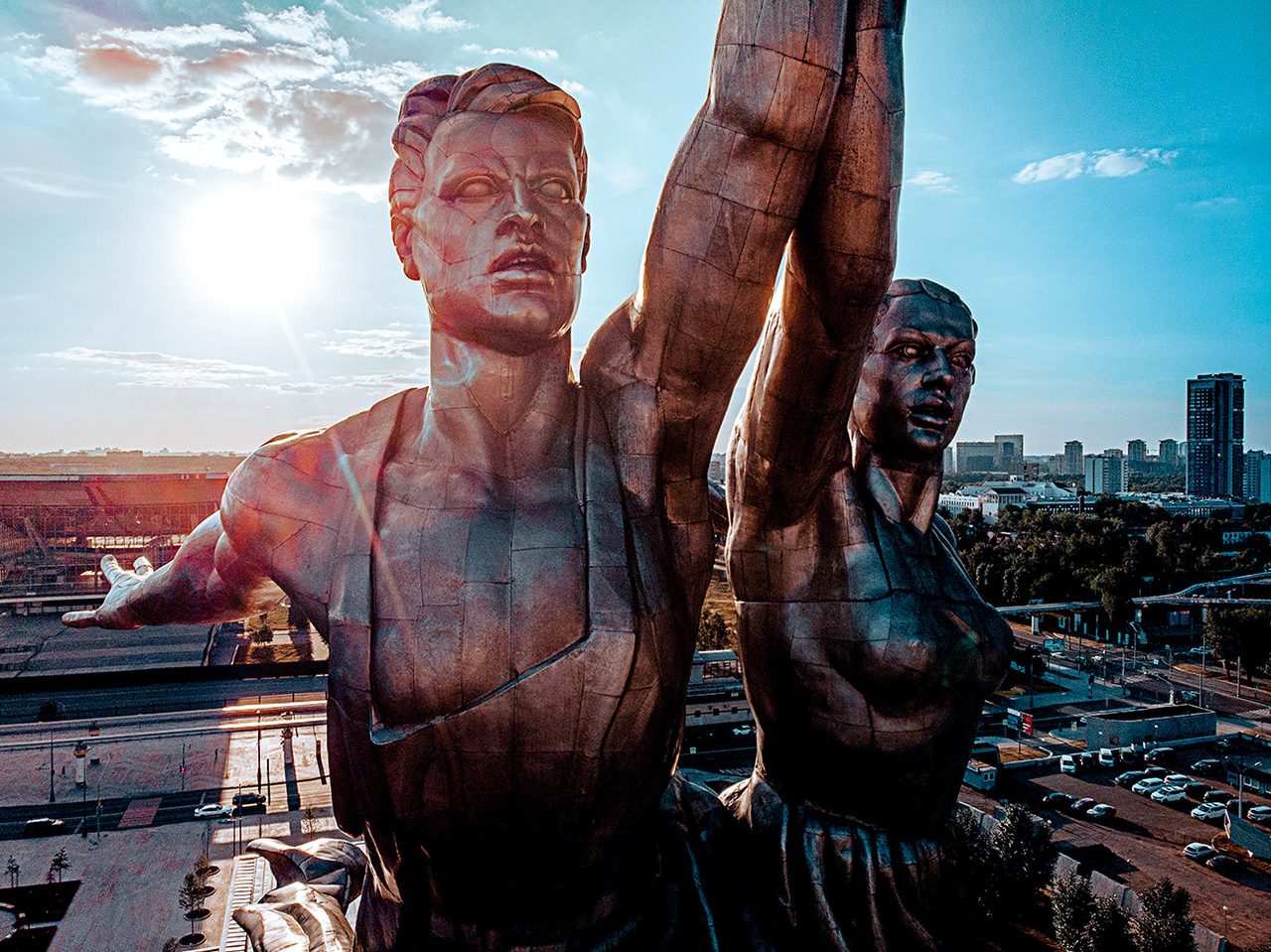
Stainless chromium-nickel steel was used to cast the figures. It was developed by Professor Pyotr Lvov and had previously only been used for aircraft skinning. The material was chosen for a reason, as it reflected light better than other metals traditionally used for sculptures. This was a winning move to stand out against the backdrop of the exhibition grounds.
The process of casting the statue took over three months. The scarf itself posed a particular challenge: the five-ton piece had to hold itself up without support, while also creating a feeling of lightness. So, a special internal frame was designed for it.
The monument was then personally approved by Joseph Stalin. In Moscow, it was cut into 65 pieces and sent to Paris, which required 28 railway cars.
4. The sculpture had antique & Soviet prototypes
Incidentally, the historical example for inspiration was the antique statue ‘The Tyrannicides’, in which Harmodius and Aristogeiton are depicted back-to-back, extending one arm forward.
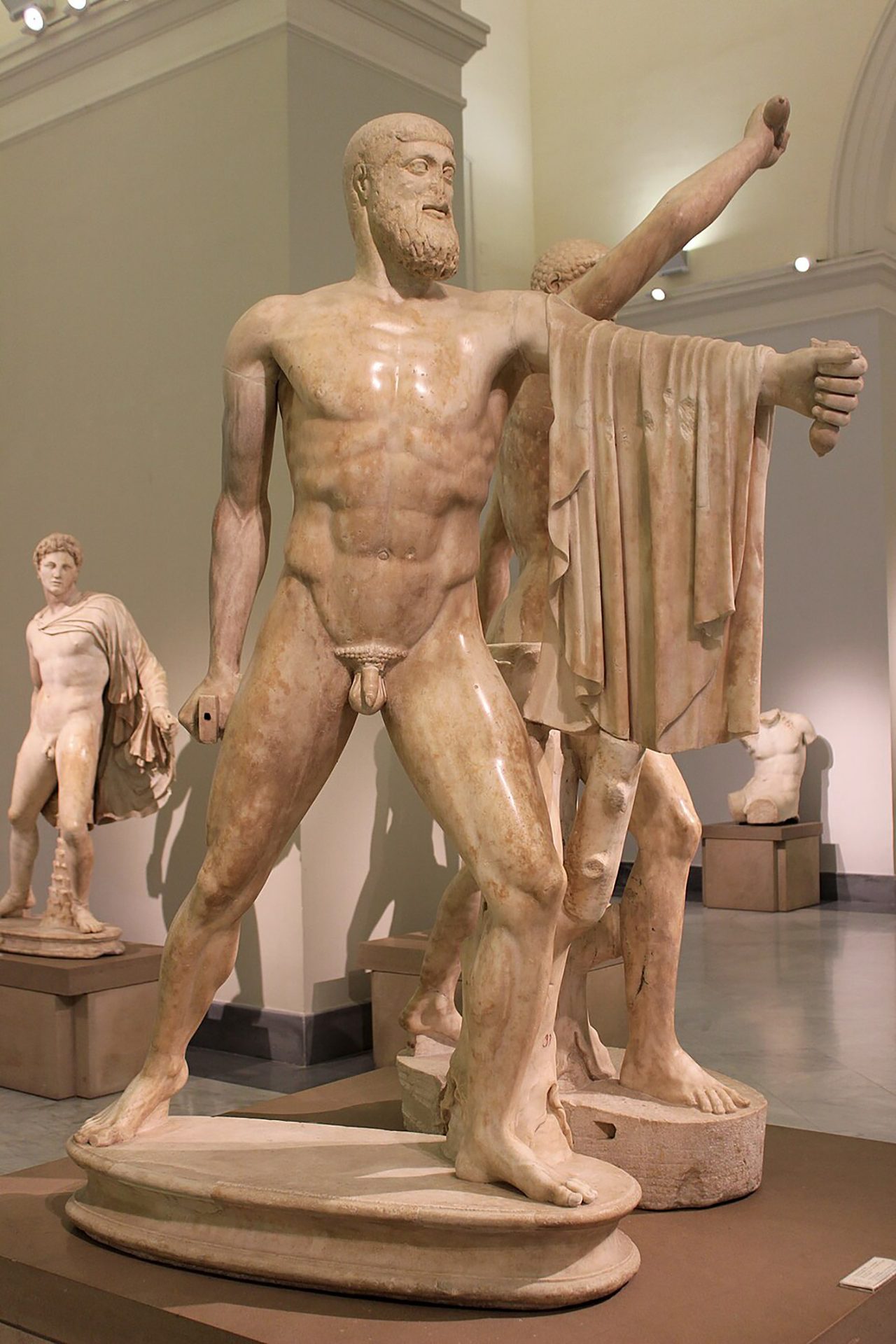 The Tyrannicides
Furthermore, the dynamic Nike of Samothrace served as a prototype for the kolkhoz woman's pose.
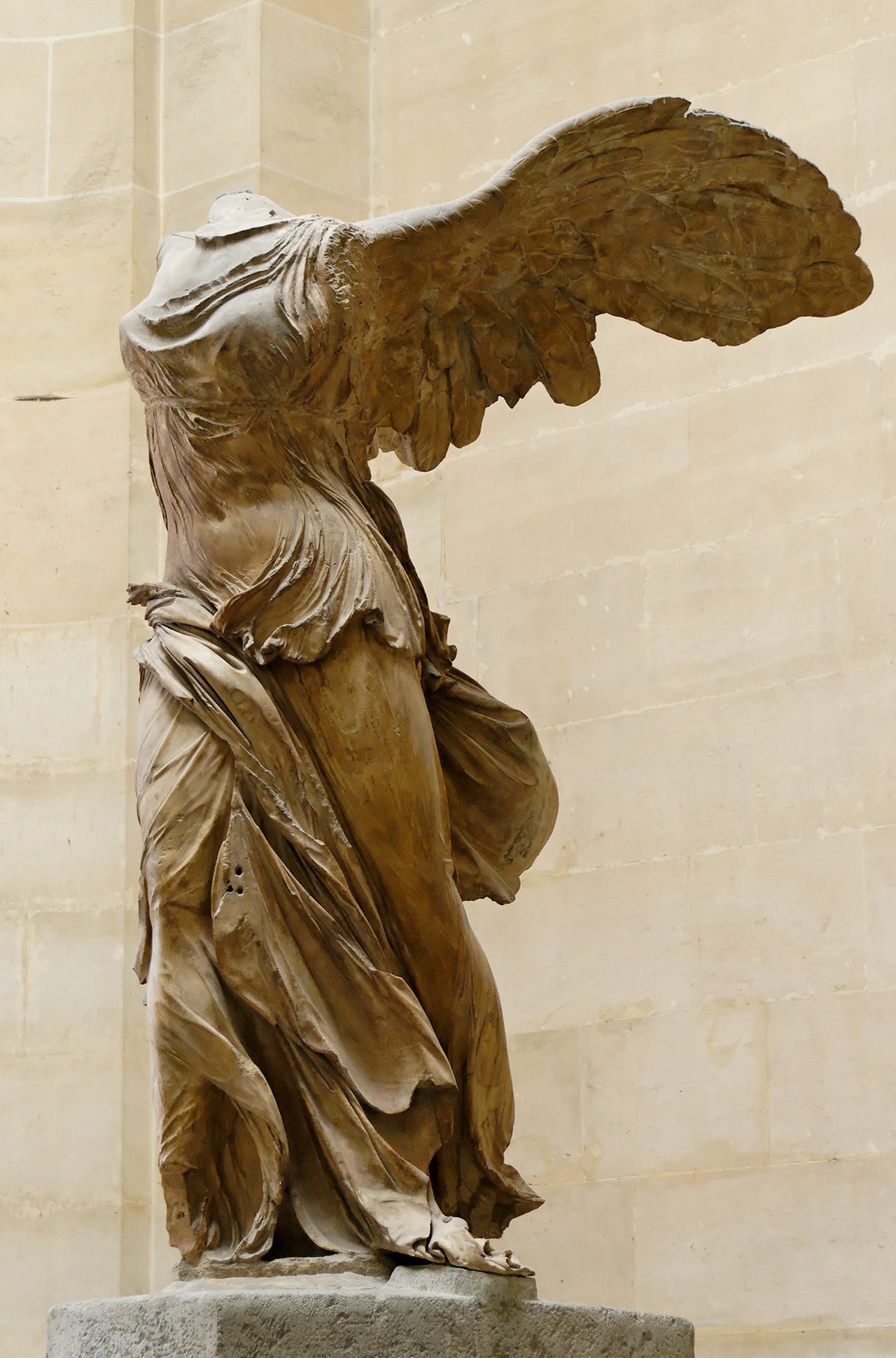 Nike of Samothrace
The model for the kolkhoz woman was an 18-year-old girl, an athlete and Komsomol (youth Communist Party) member, whom Vera Mukhina met by chance.
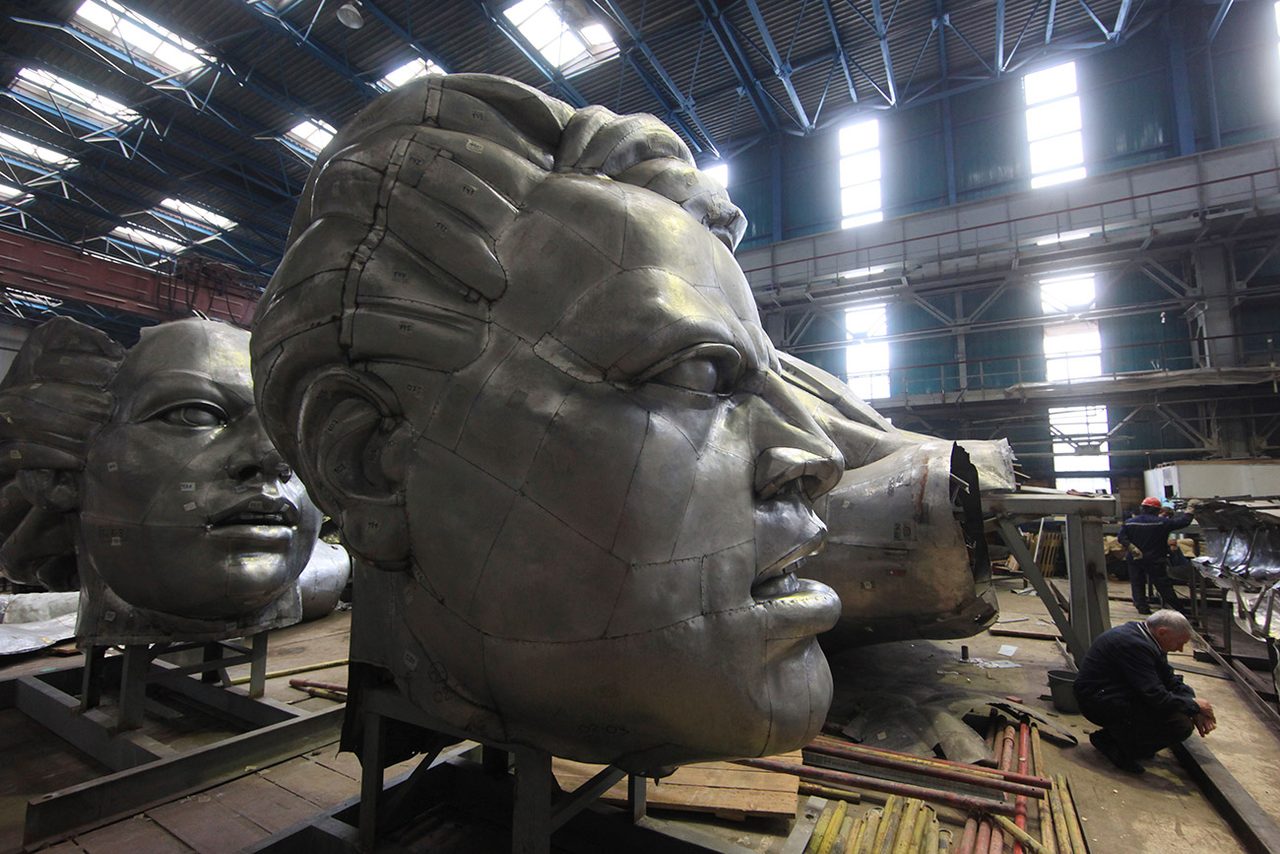 The monument recent reconstruction works
Two people posed for the worker figure: Mukhina sculpted the body from ballet dancer Igor Basenko, while the “proletarian” face from a Moscow Metro subway builder she saw at a sports parade.
5. Today, it adorns ‘VDNH’ (‘Exhibition of Achievements of National Economy’) in Moscow
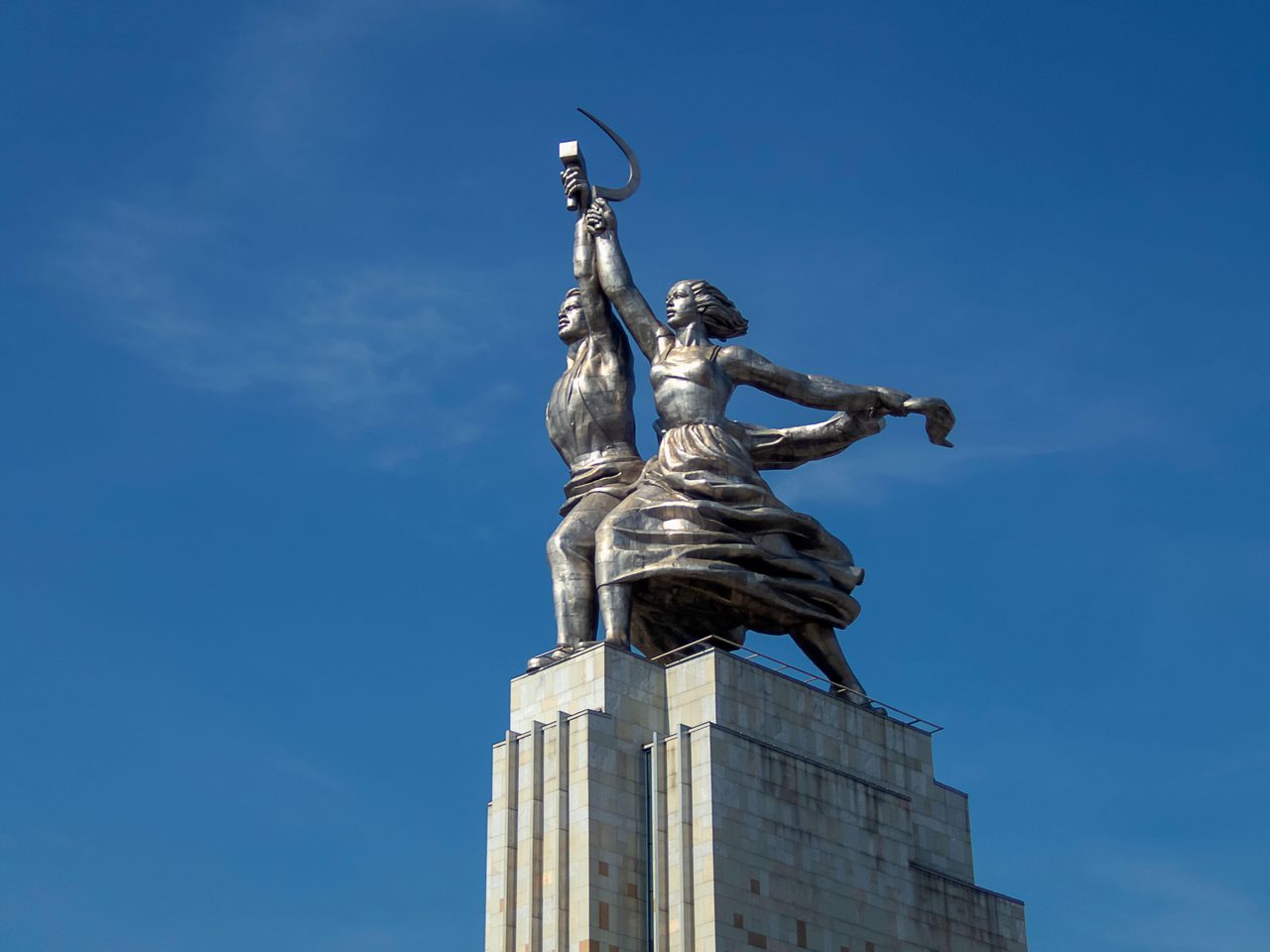
After the Paris exhibition, the sculpture was returned to the USSR and installed near VDNH. Due to haste, the monument was placed on a small pedestal, which displeased the author. Only in 2009, after restoration, did the figures again ‘climb’ to a height of 34 meters, as Vera Mukhina and Boris Iofan initially intended.